Japan Korea Taiwan China

India-Taiwan Flights Get a Boost as Air India Partners with STARLUX Airlines for Seamless Travel

India and Taiwan’s developed travel links and expanding relations will stimulate greater demand for air travel. With the Air India-STARLUX Airlines interline agreement effective from October, Taiwan will become an Air India network destination, allowing Air India passengers to purchase seamless travel itineraries and tickets through all the airlines under the Air India system to STARLUX. This makes travel between the two countries considerably more efficient. This agreement links the major Indian metro cities accessed by Air India to the Taiwanese capital of Taipei through major Southeast Asian cities. Increased travel convenience is expected to stimulate close patterns of travel and relations. Increased Taiwan-India travel is expected to enhance travel business, economic, and cultural interchanges.

There is new interline partnership between Tata Group-owned flagship carrier Air India and premium Taiwan Airlines STARLUX Airlines. On the partnership, Air India has stated that it will now allow customers traveling to/from Taiwan seamless connects to/from India and onward travel to numerous Southeast Asian cities.

What Does the Interline Partnership Mean for Passengers?

The new interline agreement between Air India and STARLUX Airlines provides a convenient way for passengers to book a single-ticket itinerary that includes flights on both carriers. This strategic partnership is designed to make air travel more accessible, efficient, and enjoyable for travelers flying between India and Taiwan.

With the ability to combine flights from both Air India and STARLUX Airlines, passengers can now book smoother journeys with fewer hassles, enjoying the benefits of both airlines’ extensive networks. The collaboration allows Air India to expand its reach into Taiwan, while STARLUX Airlines gains easier access to India’s key cities. Passengers will now have greater flexibility and comfort as they travel through shared international hubs across Asia.

Expanded Connectivity: A Closer Look at the Routes

Through this partnership, Air India can now offer connections to Taipei via its Southeast Asia gateways, including Hong Kong, Bangkok, Singapore, Ho Chi Minh City, and Kuala Lumpur. These cities serve as regional hubs for travelers looking to connect to Taiwan, providing a range of options for easy and efficient travel across Asia.

On the flip side, STARLUX Airlines will be able to provide seamless connections to major Indian cities such as Delhi, Mumbai, Chennai, and Bengaluru. These routes will be facilitated through shared gateways in Hong Kong, Bangkok, Singapore, Ho Chi Minh City, and Kuala Lumpur, providing more opportunities for both Indian and international travelers to explore new destinations.

This partnership not only increases connectivity between Taiwan and India but also improves the options for travelers coming from other regions of Southeast Asia. Passengers flying from cities like Singapore, Bangkok, and Ho Chi Minh City can easily access both Indian and Taiwanese destinations via a single connection, creating a seamless travel experience for passengers with diverse itineraries.

Enhancing Travel Experience and Premium Service

The strategic collaboration between Air India and STARLUX Airlines reflects the growing trend of global airlines teaming up to enhance customer convenience and provide premium travel experiences. Both airlines are known for their commitment to high-quality services, making this partnership a natural fit.

Air India’s commitment to providing luxurious travel options is evident in this collaboration, which offers its customers the chance to experience Taiwan’s rich culture and vibrant cities with ease. Similarly, STARLUX Airlines customers can now explore India’s diverse regions and cities with comfort and convenience through Air India’s robust network.

STARLUX Airlines is renowned for its luxurious offerings, providing a boutique international airline experience that caters to passengers looking for an elevated travel experience. The airline operates more than 30 routes to popular destinations in the U.S., Japan, Macau, Hong Kong, Vietnam, Thailand, the Philippines, Malaysia, Indonesia, and Singapore. By joining forces with Air India, STARLUX strengthens its presence in the Indian market while offering enhanced access to a growing number of destinations in Southeast Asia.

Air India’s Growth Strategy and Recent Milestones

This interline agreement marks another milestone in Air India’s ongoing efforts to expand its global network and improve customer service. The airline has been working diligently to enhance its route network and provide passengers with more travel options. As part of this effort, Air India has also focused on providing a premium travel experience with top-tier services, catering to business and leisure travelers alike.

In addition to this partnership, Air India made waves in the industry earlier this year with the announcement of India’s first non-stop flight to the Philippines. This inaugural flight, launched on October 1, connects Delhi’s Indira Gandhi International Airport with Manila, further expanding Air India’s international footprint. The flight’s success highlights Air India’s commitment to broadening its network and offering passengers more direct and convenient travel options across the globe.

STARLUX Airlines: A Luxury Airline to Watch

STARLUX Airlines, a relatively new player in the aviation industry, has quickly built a reputation for offering a premium experience to travelers. Founded in Taiwan, the airline has become known for its dedication to providing top-quality services and ensuring a high level of passenger comfort. With a growing list of international routes and a focus on delivering an exceptional in-flight experience, STARLUX has positioned itself as a luxury full-service carrier with a strong presence in the Asia-Pacific region.

The airline has made significant strides since its inception, expanding its network to include several popular destinations in the United States, Japan, Hong Kong, and Southeast Asia. Through its interline partnership with Air India, STARLUX Airlines is set to further solidify its position as a leading luxury airline in the region, providing passengers with even more travel options and superior service.

Opportunities for Future Expansion

The collaboration between Air India and STARLUX Airlines is just the beginning of what could be a growing trend of interline agreements between premium carriers. As the global aviation industry continues to recover and expand, we can expect to see more strategic partnerships aimed at improving connectivity and providing better travel experiences for passengers worldwide.

This partnership also signals the growing importance of Southeast Asia as a hub for international air travel. With its expanding network of connections, Air India is making it easier for passengers to access new markets in Asia and beyond. Similarly, STARLUX Airlines is increasing its influence in the region, enhancing its presence in India and other key markets through its collaboration with Air India.

As travelers continue to seek more seamless, convenient, and comfortable travel options, partnerships like this one will become increasingly important in shaping the future of the global aviation landscape. With Air India and STARLUX Airlines leading the charge, passengers can look forward to more exciting travel opportunities and enhanced connectivity between India, Taiwan, and other major cities across the world.

A Promising Future for Air India and STARLUX Airlines

The interline cooperation between Air India and STARLUX Airlines is a great leap for these two airlines. With more flexible travel options opened up for customers while more integration is offered between India and Taiwan. More travel options are opened for customers willing to explore these regions. With more expanded networks and premium service offerings, passengers will enjoy a more seamless and luxurious travel experience.

The collaboration is a start of more opportunity to come for Air India and STARLUX Airlines, especially in the international and cross region air market. This partnership will primarily benefit customers starting from India looking to travel to Taiwan and vice versa since their travel will primarily be streamlined.

India and Taiwan have established their air connectivity with newly created interline agreements with Air India and STARLUX airlines, facilitating to offer a seamless travel experience for their customers. Passengers can now access integrated travel across both airlines thereby providing accessibility to travel between India and Taiwan’s key metropolitan areas. The collaboration also adds travel conveniences to pivotal Southeast Asia travel centers.

The value offered to customers with more seamless travel options to different destinations is primarily because of air travel partnerships. With more travel destinations and route networks, the partnerships will further offer competitive market positioning.

Source link

Next Story

Experience the Hamamatsu and Lake Hamana Area: A Floral Wonderland for Unforgettable Moments[PR]| JAPAN Monthly Web Magazine

Shizuoka Prefecture, located in central Honshu between Tokyo and Nagoya, is a region rich in natural beauty. To its east stands Japan’s highest peak, Mount Fuji, while the Pacific Ocean stretches to its south. In the Hamamatsu and Lake Hamana area, the Hamanako Flower Festival is held every spring, offering visitors a chance to admire the vibrant flowers. The area also features attractions the whole family can enjoy, including a resort-style amusement park and a scenic ropeway that crosses the lake. It is even celebrated as a “destination where you can show your parents just how much you appreciate them.” Join us as we uncover the many charms of the Hamamatsu and Lake Hamana area, an ideal spot for making lasting memories.

Hamanako Flower Festival: A Celebration of Seasonal Blooms

With its abundant sunshine and mild climate, the Lake Hamana area in Hamamatsu City, Shizuoka Prefecture, is a haven for vibrant seasonal flowers. From March to June, the annual Hamanako Flower Festival brings the landscape to life, celebrating the beauty of nature in full bloom.

With the catchphrase “Spring in Japan begins at Lake Hamana,” the festival takes place at two main venues: Hamamatsu Flower Park and Hamanako Garden Park. The event offers a stunning relay-style display of flowers that bloom throughout each season, including Japan’s iconic cherry blossoms, tulips, nemophila, wisteria, and roses, attracting flower lovers from near and far.

Hamanako Flower Festival

Enjoy Seasonal Flowers at Hamamatsu Flower Park

Hamamatsu Flower Park, one of the main venues of the Hamanako Flower Festival, is a sprawling botanical garden covering 300,000 square meters. Home to around 3,000 plant species, it boasts breathtaking floral displays throughout the year.

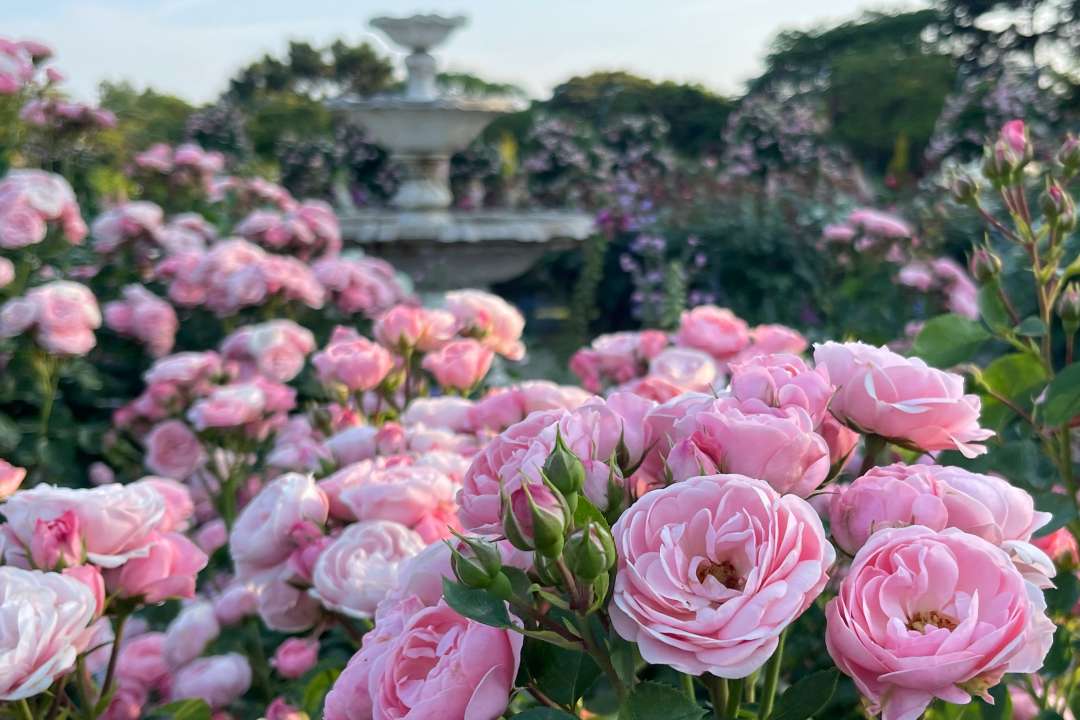
Rose Garden, Hamamatsu Flower Park

From mid-March to mid-April during the flower festival, the Tulip and Cherry Blossom Garden reaches its peak, with 1,300 cherry blossom trees and 500,000 tulips blooming simultaneously. This is the only garden in Japan where you can witness such a large-scale display of cherry blossoms and tulips.

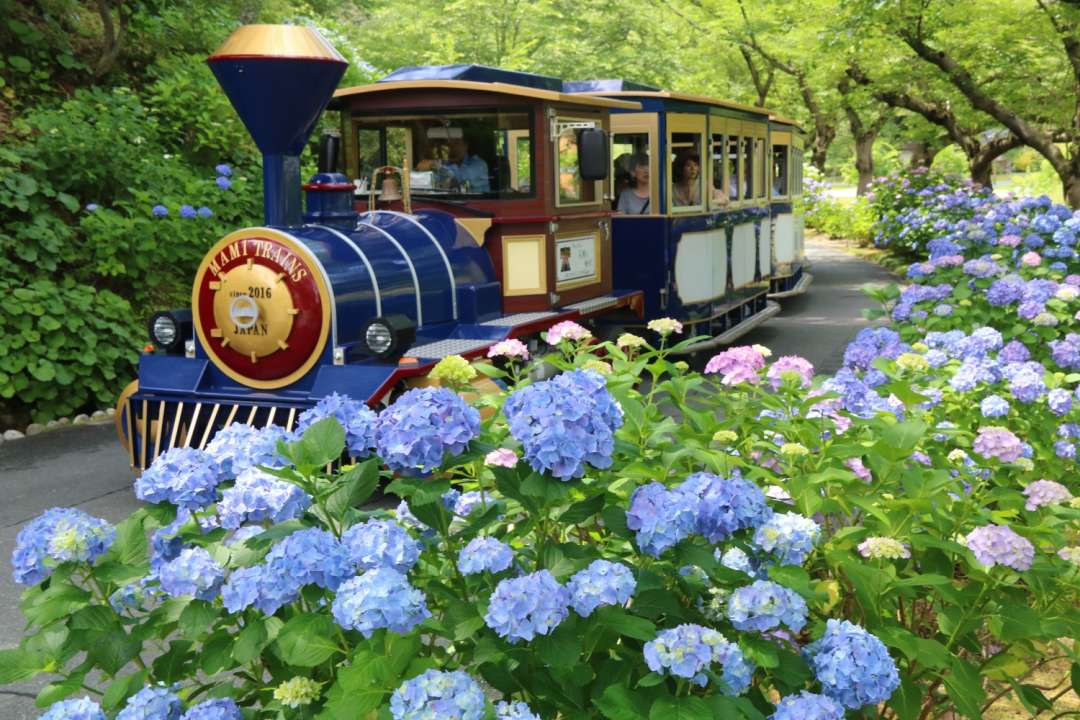
As spring transitions to early summer in late April to early May, the 170-meter-long Wisteria Corridor becomes a mesmerizing sight, especially when illuminated at night. In June, hydrangeas in shades of white, blue, and purple brighten the rainy season. The park also features a large greenhouse called the Crystal Palace, dynamic fountain shows synchronized with music, and the Flower Train bus, which offers a scenic ride through the park—making it a perfect destination for families.

Flower Train Bus at Hamamatsu Flower Park

Spectacular Flower Festival Scenes at Hamanako Garden Park

Hamanako Garden Park, the other main venue of the Hamanako Flower Festival, is a vast green space spanning approximately 56 hectares, offering expansive views of the natural beauty and open spaces of Lake Hamana.

From late March to mid-April, 10,000 tulips in 100 varieties blossom in striking colors, heralding the arrival of spring. Then, from mid to late April, around 300,000 nemophila flowers bloom to create an unforgettable sight, transforming the landscape into a vast blue carpet. The park also features a 50-meter-high observation tower, showcasing panoramic views of the entire garden park and Lake Hamana.
The Flower Garden, Hamanako Garden Park

Flower Museum, Hamanako Garden Park

Visitors can also discover rare flowers, such as the evergreen witchhazel, which blooms in April in Kosai City, adjacent to Hamamatsu. Found in only three locations in Japan, its delicate ribbon-like petals make it especially captivating. Another rarity is the shibukawa tsutsuji (jingu tsutsuji, Rhododendron sanctum), which blooms in May in Mikawa, parts of Mie Prefecture, and Hamamatsu. This rare flower thrives only in serpentine rock areas.

Evergreen Witchhazel

Jingu Tsutsuji (Rhododendron Sanctum)

Ryotanji Temple: A Legacy of 1,300 Years

According to temple records, Ryotanji Temple was founded by the priest Gyoki during the Nara period (710–794). From the Heian period (794-1185), it is said to have become the family temple of the Ii clan, a samurai lineage. The temple’s garden, designed by Kobori Enshu—a feudal lord and garden designer of the Edo period (1603–1867)—has been designated a national place of scenic beauty. It features numerous stone arrangements and artificial hills that depict cranes and turtles.
Ryotanji Temple also hosts seasonal flower events, including the Flower Festival in early April and the Satsuki(azalea) Festival from late April to May.

Ryotanji Temple

Ryotanji Garden by Enshu Kobori

Hamanako PalPal: A Resort-Style Amusement Park by the Lake

Located on the shores of Lake Hamana, Hamanako PalPal is a resort-style amusement park featuring around 30 attractions suited for all ages, from young children to adults. With a mix of fairy-tale-themed rides and thrilling extreme attractions, it’s a top destination for families and couples alike.

For an even more memorable experience, pair your visit with a ride on the Kanzanji Ropeway next door. Together, they offer a fun-filled way to take in the beauty of Lake Hamana.

Kanzanji Ropeway: Japan’s Only Ropeway Crossing a Lake

The Kanzanji Ropeway is the only ropeway in Japan that crosses a lake, traversing 723 meters in just four minutes. Below, the picturesque Lake Hamana stretches between the cities of Hamamatsu and Kosai in western Shizuoka Prefecture. The ropeway connects the Hamanako PalPal amusement park to the summit of Mount Okusa, offering a breathtaking 360-degree panoramic view throughout the ride.

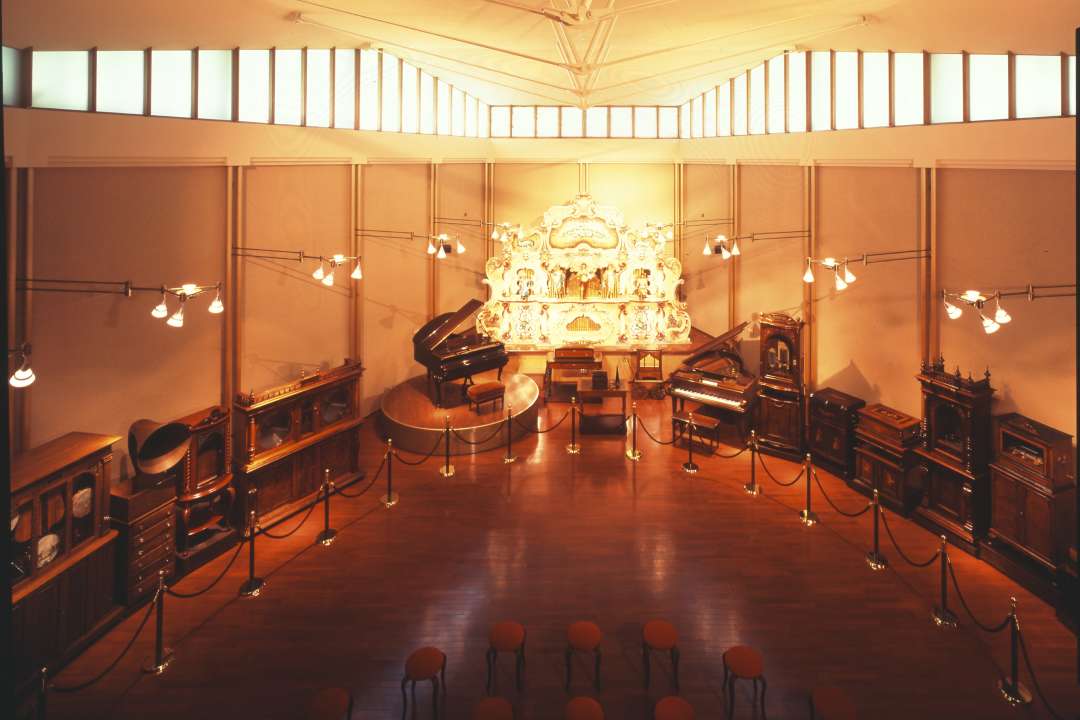
At the summit of Mount Okusa sits the Hamanako Orgel Museum, home to a collection of valuable music boxes. Visitors can admire the intricate displays and enjoy the enchanting sounds. From the observation deck, you can take in sweeping views of Lake Hamana and the Pacific Ocean—and on clear days, even Mount Fuji. The scenery transforms with the seasons and time of day, offering plenty of dynamic sights.

Hotel Wellseason Hamanako: Savor Local Flavors and Relax in Hot Springs

Located in the Kanzanji Onsen hot spring area, Hotel Wellseason Hamanako is a family-friendly resort facility designed to accommodate guests with babies and small children, ensuring a stress-free stay.

The hotel is directly connected to Hamanako PalPal, and guests enjoy free admission to the amusement park. For relaxation, hotel guests have exclusive access to the open-air bath Hitotoki no Yu, or can unwind at the adjacent Hanasaki no Yu.
The buffet-style meals highlight local specialties, including Lake Hamana’s famous unagi (eel), premium Mikkabi-brand Japanese beef, and Hamamatsu gyoza. These flavors are beloved by both visitors and locals alike.

How to get there

Hamamatsu is easily accessible from Tokyo or Osaka in about 90 minutes via the Shinkansen bullet train. For those traveling by air, Chubu Centrair International Airport is a convenient option. From Nagoya, the Shinkansen bullet train is a hassle-free way to reach Hamamatsu in just 30 minutes. Once at Hamamatsu Station, the Lake Hamana area is about a 50-minute bus ride away.

Source link

Next Story

Celebrate 30 Years of Indo-Japan Friendship at the Hyderabad Japan Festival 2025 This Weekend!

This weekend, Hyderabad will play host to a slice of Japan. The 30th annual Hyderabad-Japan Festival returns to the city on October 25 and 26, 2025, at the State Art Gallery, Madhapur. Entry is free and open to all. Expect Japanese martial arts demonstrations, folk dances, and live music bands in the Japanese tradition.

There will also be Kuchipudi performances, live demos of Ikebana (the art of flower arrangement), Bonsai, Sumie (Japanese ink painting), and Origami (the art of paper sculpting). Visitors can try their hand at the crafts while learning directly from experts. Exhibitions and workshops featuring calligraphy and painting to photography and design of both cultures.

The event is organized by Na Ra JAPAN HUB, an initiative of the Naga Rama Trust, founded by Dr. B. Ramabhadra and Mrs. Naganath. Having spent nearly two decades in Japan, the couple began this festival three decades ago to foster cultural understanding between India and Japan. What started as a modest gathering has now become one of Hyderabad’s most anticipated annual events.

Talks and Exchanges

The Hyderabad-Japan Festival has always been about learning what makes Japan’s culture, education, and lifestyle so admired around the world, and finding how it connects with Indian values. This year, there will be special sessions and talks on:

  1. The Japanese language and learning pathways for students in India
  2. Education and career opportunities in Japan
  3. Indo-Japan relations and city-level collaborations like that between Hyderabad and Hamamatsu City
  4. Insights into Japan’s productivity methods, work ethics, and the globally loved Ikigai philosophy

These sessions will help students, entrepreneurs, and professionals understand how collaboration between the two nations is growing in education, business, and culture.

The festival has strong institutional support from:

  • Consulate-General of Japan in Chennai
  • Japan Foundation, New Delhi
  • JETRO (Japan External Trade Organization), New Delhi
  • Hyderabad Japanese Association

What To Expect

Japanese art groups like the Ohara School of Ikebana (Hyderabad), Golden Dragons, and several individual masters of Bonsai, Origami, and Sumie will showcase their skills. School students will participate in Origami, Painting, and Japanese Speech contests. Winners will be recognized during the festival. Adding to the festival’s significance, several dignitaries and cultural leaders will be in attendance. Among them are: Kenji Miyata, Acting Consul General of Japan, Chennai; Koji Sato, Director General, Japan Foundation, New Delhi; Takeshi Suzuki, Director General, JETRO, New Delhi; Collector Smt. Harichandana, IAS; Former DGP Sri SK Jayachandra, IPS (Retd.). They will be joined by artists, educators, business leaders, and enthusiasts from both countries.

Source link

Next Story

Explore the Real Places Behind Shōgun and More! Literary-inspired Travel in Japan


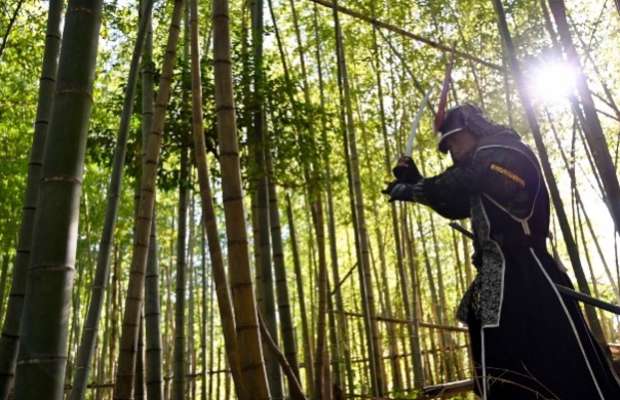
The 1975 historical novel Shōgun by James Clavell, on which the 2024 TV series of the same name is based, is a work of fiction that includes real historical persons and events. Although his name has been changed in the novel, an Englishman really did sail to 16th-century Japan and become a samurai in the service of a warlord who was intent on becoming Shogun, the country’s military governor. Not only that, but all the locales mentioned in the book are real places, and fans of the story can go there today and discover a side of Japan that they’ve most likely only read about. In this article, we’ll introduce a fascinating itinerary that will take you through the world of Shōgun and beyond.

Did Shōgun Happen at Osaka Castle? A Look at the Facts and History

In Clavell’s novel, Osaka Castle features prominently as the iconic backdrop for the political turmoil that followed the death of the fortification’s previous lord, Toyotomi Hideyoshi (the Taiko: his title in later life and his character’s title in the fictional retelling.) Beyond the book, Osaka Castle dates back to 1583, and it served as Toyotomi’s seat of power when he attempted to unify a fractured Japan after the emperor and the shogun lost political power in the 15th century. The taking of Osaka Castle was instrumental in Tokugawa Ieyasu (the fictional Toranaga Yoshii in the book) consolidating power and ultimately ending nearly 200 years of civil war.

Osaka Castle illuminated at night

Today, Osaka Castle remains one of the most iconic historical destinations in Japan. The castle with its surrounding 106-hectare park offers visitors an immersive cultural experience that includes the pleasures of Japan’s four seasons (with cherry blossoms in spring and colorful foliage in autumn), traditional architecture, and curated exhibitions. Some of the castle turrets are original structures dating back hundreds of years, while the main keep is a reconstruction from 1931 and a Registered Tangible Cultural Property that today functions as a museum. Displays highlight the political, military, and architectural history of the region.

The Izu Peninsula and the First European Samurai

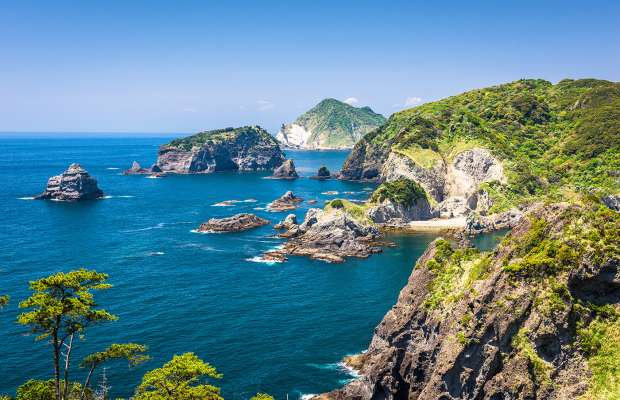
The rugged cliffs of Izu Peninsula, Shizuoka Prefecture

In Shōgun, Englishman John Blackthorne (based on the historical figure William Adams) arrives in Japan at the fictional Anjiro, based on the real-life Ajiro, a village on the eastern coast of the Izu Peninsula in Shizuoka Prefecture. Adams actually arrived in Japan on the island of Kyushu, over 850 kilometers away, but Izu’s proximity to Edo (modern-day Tokyo) made it a more convenient setting for the book’s narrative. Being able to walk in Blackthorne’s footsteps is not the only reason to visit the peninsula, though.

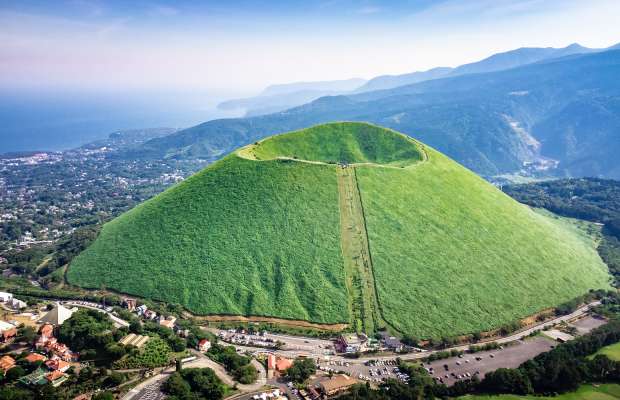
Aerial View of Mt. Omuro

The Izu Peninsula, located forty minutes from Tokyo on the Shinkansen bullet train, is a UNESCO Global Geopark where visitors can explore many natural and cultural attractions like  Mt. Omuro and the Hakone Hachiri section of the old Tokaido highway, which once connected Edo and Kyoto. Coastal towns in Izu are famous for their onsen (hot springs), fresh seafood, and panoramic views of Mt. Fuji. Inland areas are rich in nature with scenic hiking trails lined with cedars, which were planted around the time William Adams lived in Japan.

The Historic Battlefield of Sekigahara Shaped Shogun-Era Japan

Site of Tokugawa Ieyasu’s First Encampment (Momokubariyama) at the Sekigahara battlefield

The Shōgun narrative ends after the Battle of Sekigahara, during which Toranaga (the real-life Tokugawa Ieyasu) defeated his archnemesis Ishido (the real-life warlord Ishida Mitsunari) and cemented his rule over Japan. Fought on October 21, 1600, in present-day Gifu Prefecture, the actual battle between Ieyasu and clans loyal to the Toyotomi was the largest in the history of feudal Japan

The Gifu Sekigahara Battlefield Memorial Museum recreates the greatest battle in Japanese history

Today, Sekigahara is a tranquil town that preserves the legacy of this decisive clash. A large portion of the battlefield has walkable routes that take visitors through preserved encampment sites enhanced with immersive displays. In addition, the Gifu Sekigahara Battlefield Memorial Museum provides multilingual exhibitions that highlight the importance of the battle in the broader context of Japan’s political history.

Journey into Japanese Literature

Tokushima Awa Odori, where the tradition began – Koenji’s version carries on the spirit.

Fans of Japanese literature fortunately have more destinations to explore than just those connected to Shōgun. In Haruki Murakami’s novel 1Q84 (2009), the Tokyo neighborhood of Koenji serves as an important spot from which the main characters navigate a parallel existence. Real-life Koenji is known for its underground, bohemian culture, vintage shops, live-music venues, and lively bar scene. It’s also where the dance festival Koenji Awa Odori takes place. Held since 1957 on the last weekend of August, it attracts over a million visitors annually and involves 12,000 dancers. Outside of big celebrations, Koenji is a great place to find authentic Japanese street culture and to shop for unique fashion.

Maiko (apprentice geisha) in Gion, Kyoto

A completely different atmosphere can be found in the Gion district of Kyoto, the primary setting for Arthur Golden’s Memoirs of a Geisha (1997). Taking place in the early 20th century, this novel highlights Gion’s traditional geisha teahouses and the neighborhood’s historic significance. Established during the late 14th century around Yasaka-jinja Shrine, Gion remains a center for Japan’s traditional arts, including dance, music, and tea ceremony. Visitors can wander along cobblestone streets, attend geisha performances, and discover historic architecture like Kennin-ji temple, the oldest Zen temple in Kyoto, dating back to 1202 and located just south of Gion.

An Itinerary in Every Book

View of Yuigahama Beach, Kamakura

Natsume Soseki’s novel Kokoro (1914) is a psychological examination of modernity and human relationships, and it has come to inspire readers to visit Kamakura City, in Kanagawa Prefecture, where one of the main characters famously enjoys swimming. These visitors might be interested in Kamakura’s Yuigahama Beach, a popular leisure destination that attracts tourists and locals alike. Kamakura is the old samurai capital of Japan, full of tangible history like the Great Buddha of Kamakura, a National Treasure dating back to 1252.

Every story set in Japan can lead to a new adventure. A visit to any place becomes much more meaningful if that place is the setting of a favorite book.

Source link

Next Story

Experience Japanese Culture in Oita Prefecture, Home to Japan’s Largest Hot Spring Flow


Located in the northeastern part of Kyushu and bordering Fukuoka Prefecture, Oita is Japan’s celebrated “Hot Spring Prefecture.” It ranks number one in both the number of hot spring sources, with 5,090 out of Japan’s 28,000, and in flow rate, with an average of 295,708 liters per minute. Oita is also a treasure trove of gourmet food, offering an abundance of fresh seafood from its coastal areas and bountiful mountain produce from its inland regions, where majestic peaks and crystal-clear water sources abound.

Oita offers a chance to experience the essence of traditional Japanese resort life, where visitors can relax in the natural beauty and healing power of its hot springs while savoring its exquisite cuisine. Moreover, Oita offers unique hot spring experiences that you won’t find anywhere else. Why not explore something new and experience the deep-rooted hot spring culture of Oita Prefecture? In this article, we’ll introduce two of its most famous hot spring regions: Beppu and Yufuin.

Beppu: A Hot Spring Paradise Gaining Global Attention

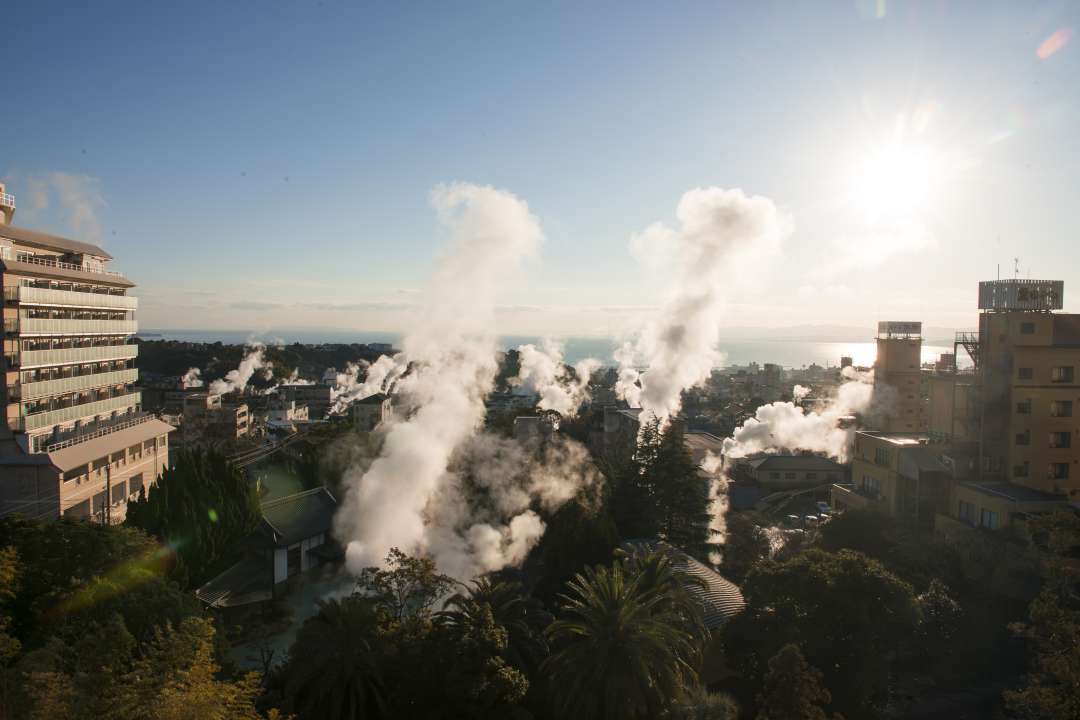
Beppu, one of Japan’s premier hot spring destinations, is often called the “Hot Spring Capital” and boasts the highest number of hot springs and the largest volume of hot spring water in Oita Prefecture. The entire town is enveloped in geothermal activity, with steam rising from hot springs throughout the area, creating a truly atmospheric welcome for visitors. Beppu is home to numerous hot spring areas, with the eight most iconic ones collectively known as Beppu Hattou, or the Eight Hot Spring Districts of Beppu. One of Beppu’s greatest charms is the sheer variety of hot spring experiences it offers.

Steam rising from various spots throughout the city of Beppu

Hells of Beppu

A must-see attraction in Beppu is the Hells of Beppu, a tour that takes you around seven unique “jigoku”, or “hells”—hot spring vents formed by the sheer power of nature. The landscapes are otherworldly, unlike anything you’ll see elsewhere.

Among the seven hells, the Umi (sea) Jigoku captivates visitors with its striking cobalt-blue hot spring water, while the Chinoike (blood lake) Jigoku features vibrant red-hued hot mud. However, this isn’t just a collection of photogenic sights—it’s an immersive experience that lets you feel the mystery of Earth firsthand.

Nationally Designated Place of Scenic Beauty: Umi Jigoku

Nationally Designated Place of Scenic Beauty: Chinoike Jigoku

Kannawa Onsen and Geothermal Cuisine (Jigoku-Mushi)

Kannawa Onsen is a district in Beppu where an especially large amount of steam rises from the ground, creating a landscape that epitomizes a true “hot spring town.” The area has long prospered as a hot spring retreat, with numerous hotels and “ryokan” inns still standing today, making it an ideal place to fully relax and immerse yourself in the ultimate hot spring experience.

Hot spring steam rising from Kannawa Onsen

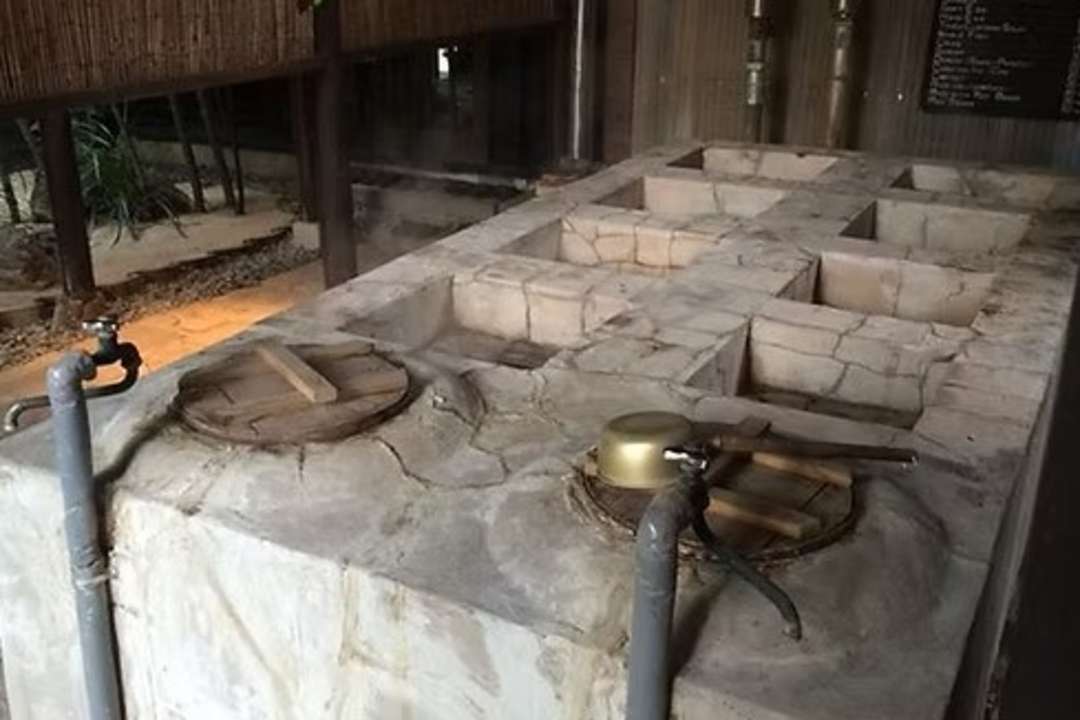
At Kannawa Onsen, don’t miss the traditional culinary experience of “Jigoku-Mushi”, or hot spring steam cooking. This method uses geothermal steam to cook ingredients without oil, preserving their nutrients. Due to the fact that it’s a simple, oil-free cooking technique, “Jigoku-Mushi” is especially popular among vegans and health-conscious diners.

Geothermal cooking: “Jigoku-Mushi”

The restaurant Otto e Sette Oita has given traditional “Jigoku-Mushi” a modern twist. In addition to steam-cooked dishes, it offers “Onsen Italian” cuisine, which incorporates hot spring water in the cooking process.
Pasta is boiled using hot spring water instead of “dashi” (stock), sauces are simmered with geothermal heat, and fruits and vegetables are naturally ripened and fermented. Owner-chef Tetsuya Kakehashi presents this as a new evolution of hot spring culture. Indulge in dishes like hot spring-boiled pasta, beef cooked in geothermal steam, and seasonal fish prepared in the same way—all available as part of multi-course menus for both lunch and dinner.

Pasta cooked in hot spring water

Vegetables simmered in hot spring water

Vegetables steamed in a “Jigoku-Mushi” cauldron with geothermal vapor

A sample lunch course menu

“Jigoku-Mushi” cauldrons

Steaming basket used for “Jigoku-Mushi”

Unique Hot Spring Experiences

A visit to Beppu wouldn’t be complete without experiencing its diverse hot springs. One such experience can be had at Kannawa Mushiyu (Kannawa Steam Bath), which has a history of over 700 years. Inside a stone chamber resembling a sauna, the floor is layered with the medicinal herb Sekisho (Japanese sweet flag), while geothermal steam gently warms the body. This traditional hot spring therapy promotes perspiration in a high-humidity environment, providing relaxing and detoxifying benefits.

Another unique experience is the sand bath, a traditional bathing method where the body is buried in geothermally heated sand, allowing its warmth to penetrate deeply. The sand, nourished by mineral-rich spring water, envelops the body to promote sweating, relaxation, and detoxification. Hyotan Onsen Hot Springs is one of the facilities where visitors can enjoy this therapeutic bathing method, along with open-air baths, waterfall baths, steam baths, and private family baths for a complete hot spring session.
For those looking to combine skincare with relaxation, mud baths—a bathing method using hot spring mud—provide the perfect option. The mineral-rich mud and hot-spring components help smooth the skin, improve circulation, and detoxify the body. At Beppu Onsen Hoyoland, guests can enjoy mud baths in an open-air setting surrounded by nature, allowing them to experience the benefits of Beppu’s geothermal wonders.

Kannawa Mushiyu (Kannawa Steam Bath)

Sand bath at Hyotan Onsen Hot Springs

Beppu Onsen Hoyoland’s mud baths

Yufuin: A Hot Spring Retreat where Healing and Art Converge

Yufuin is a picturesque and tranquil hot spring retreat nestled near the center of Oita Prefecture. Spreading out at the foot of the majestic Mount Yufu, this hot spring destination offers a serene contrast to the lively atmosphere of Beppu, allowing visitors to unwind in a peaceful natural setting.
During the tourism development of the 1970s, Yufuin was inspired by the German spa town of Badenweiler, shaping a setting where nature, hot springs, and art harmoniously coexist. Even today, the area retains a distinct European charm, with art museums, cafes, and galleries scattered throughout the town.

The tranquil landscape of Yufuin with Mount Yufu in the background

Lake Kinrin

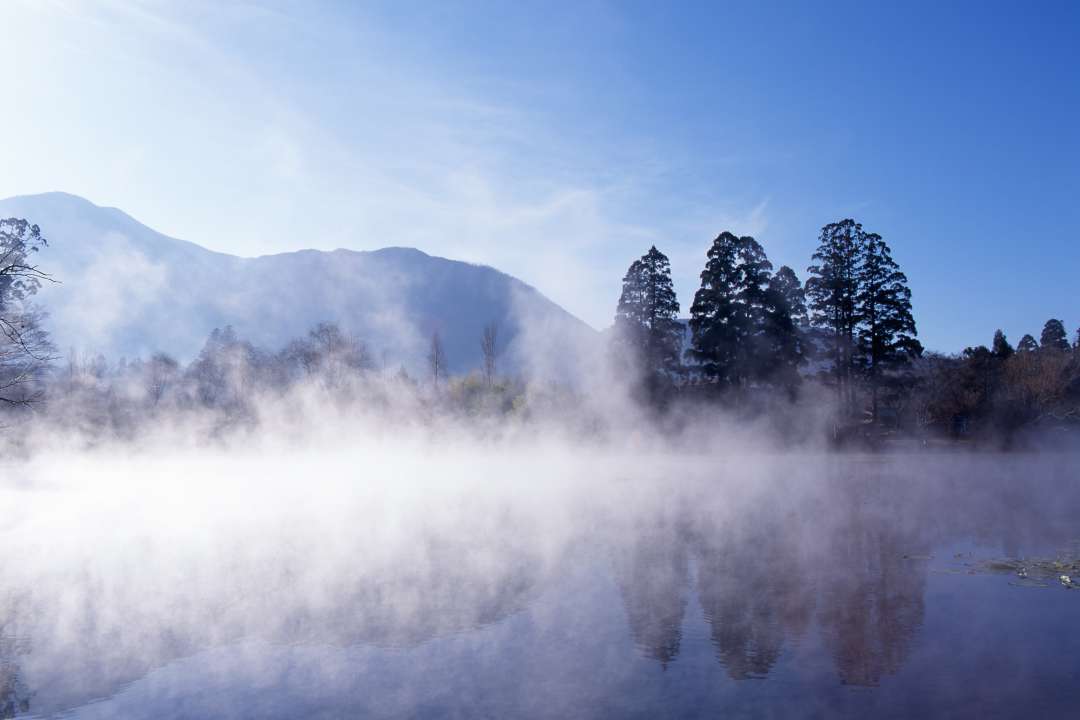
Lake Kinrin offers a breathtaking, almost dreamlike scenery. Fed by hot spring water, the lake maintains a relatively high temperature, causing mist to rise from its surface in the early mornings, especially during the colder months. Visitors are invited to take a leisurely stroll along the shore and immerse themselves in this enchanting scene.

Morning mist over Lake Kinrin—its appearance changing with the day

Hiking Mount Yufu and Cycling the Yamanami Highway

For those seeking an active experience, hiking up Mount Yufu is recommended. As the symbol of Yufuin, this beautiful 1,583-meter peak offers well-maintained trails suitable even for beginners. From the summit, hikers are rewarded with incredible views of the Yufuin townscape and surrounding mountains.

Mount Yufu

Cycling along the Yamanami Highway is also a must-try, especially as it serves as the main trailhead for climbing Mount Yufu. Even for those who aren’t avid cyclists, the experience proves irresistible, riding through the wind while taking in views of the majestic mountain. It is possible to rent bicycles in Yufuin, but for an even better experience, head to Yamanami Rental Cycle in Kokonoe Town, where you can cycle through beautiful scenery that stretches all the way to the Aso area.

Mount Yufu as seen from the Yamanami Highway

Yamanami Highway at Kokonoe Town

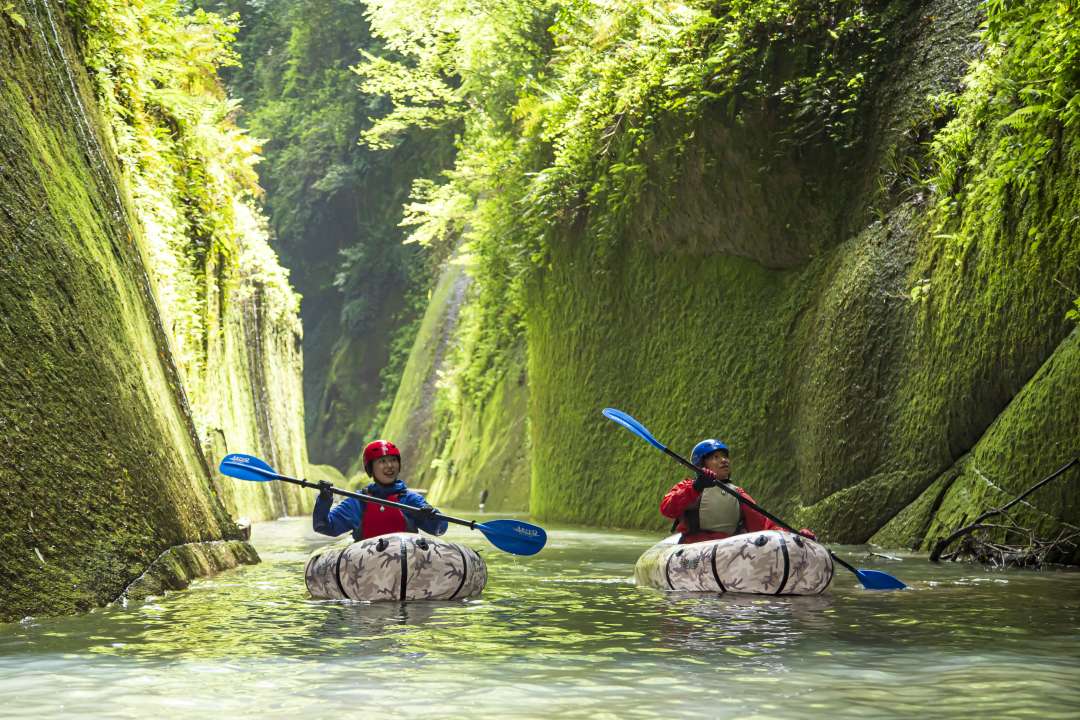
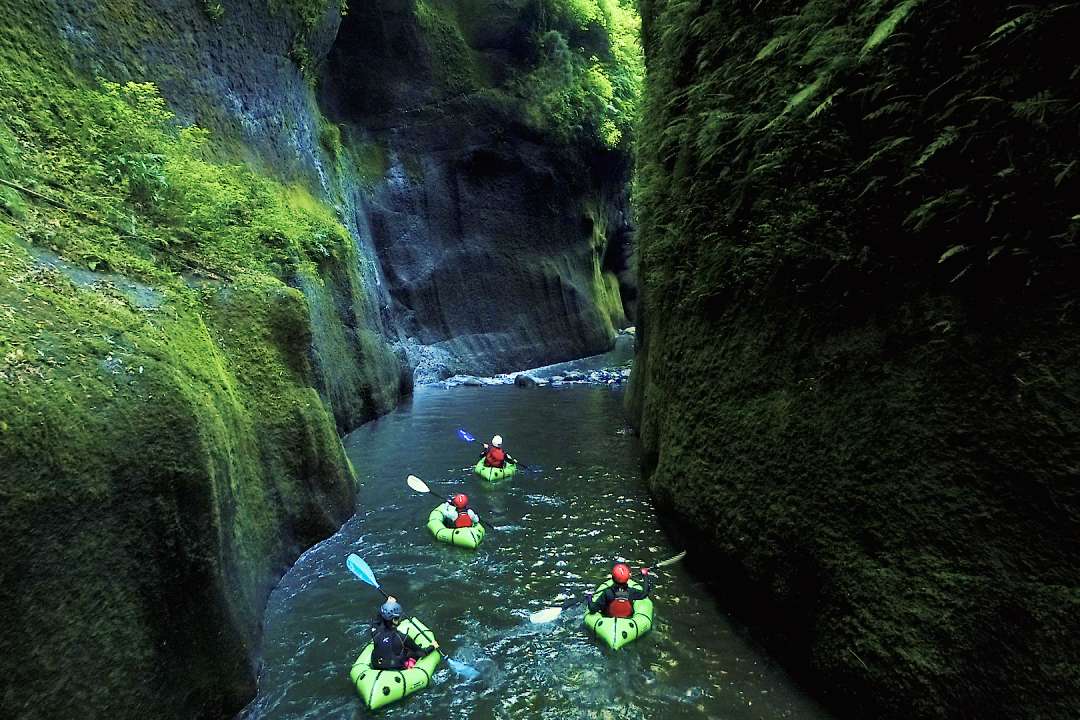
Yufugawa Gorge Packrafting Tour

Yufugawa Gorge offers magnificent natural beauty, with a mysterious landscape shaped over countless years. Why not embark on an adventurous tour using a lightweight rubber boat to explore deep, uncharted parts of the gorge? There, you’ll encounter views unlike any other, including beautifully sculpted rock walls and countless waterfalls cascading like threads from the cliff faces.

A Fulfilling Experience Spent Savoring the Town’s Natural Beauty

A stay in Yufuin offers the perfect opportunity to unwind and be healed by its hot springs. Surrounded by the natural beauty of the town and watched over by Mount Yufu, visitors to the town can tour art museums or take leisurely strolls through the picturesque satoyama – a traditional rural landscape where nature and human habitation coexist in harmony. This leisurely time will leave you feeling recharged, body and soul.
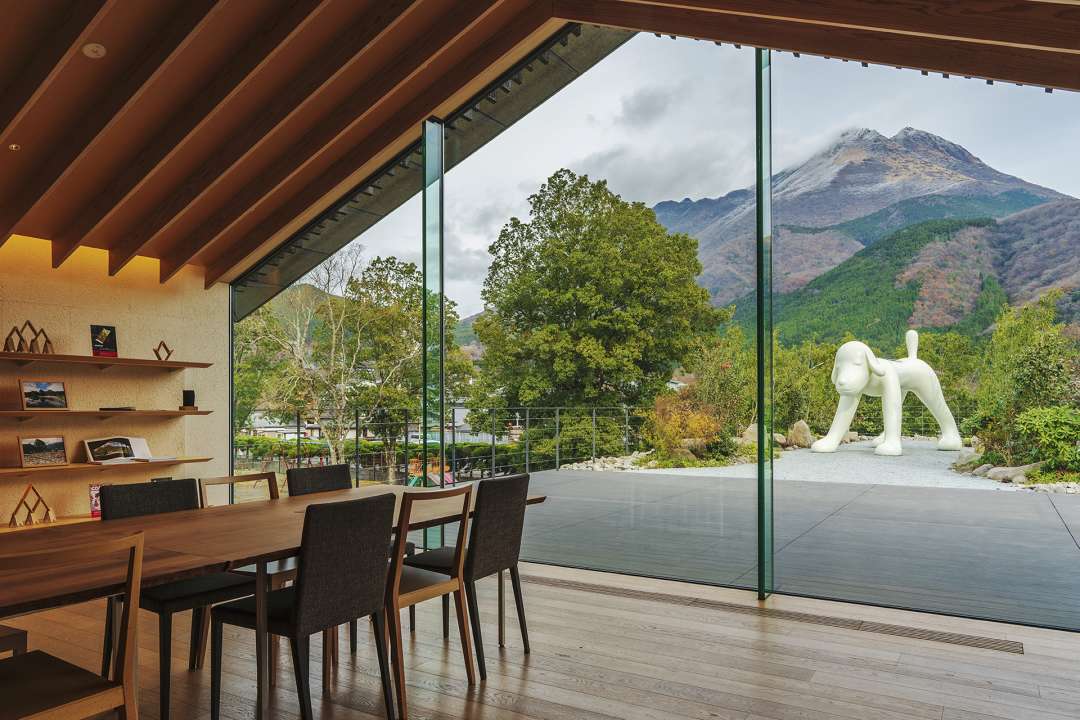
At the COMICO ART MUSEUM YUFUIN, enjoy modern art within a sophisticated space designed by Kengo Kuma. Meanwhile, visiting Unagihime Shrine, which dates back to the 9th century, or Ogosha Shrine, home to a giant cedar tree over a thousand years old, offers a chance to connect with Japan’s spiritual culture. The mystical atmosphere of these ancient sites reflects the thoughts and traditions of the locals which have been preserved for centuries.

COMICO ART MUSEUM YUFUIN, designed by Kengo Kuma

© Yoshitomo Nara 2017

Looking out at Yoshitomo Nara’s artwork, “Your Dog”

Unagihime Shrine

Ogosha Shrine

The giant cedar tree at Ogosha Shrine, over a thousand years old

ENOWA YUFUIN: Savoring the Luxury of Farm-to-Table Cuisine and Hot Spring Culture

For the Japanese, hot springs are special spaces for healing both body and soul. Historically, hot springs were used for long-term stays focused on recovery, often referred to as “hot-spring therapy.” In recent years, the trend has shifted toward enjoying hot springs while staying at a ryokan inn and indulging in gourmet delights, leading to the rise of luxury hot spring resorts.

ENOWA YUFUIN stands out by offering a luxurious retreat where guests can savor the finest cuisine crafted from fresh vegetables grown on its own farm. Nestled in the abundant natural beauty of Yufuin, this auberge offers guests the opportunity to reconnect with nature and rediscover their true selves amidst expansive grounds.
Embracing the farm-driven philosophy of “the menu for the day is decided by the farm,” each dish celebrates the vitality of nature for guests to enjoy. The robust flavors of the ingredients, nurtured from the soil up, will leave a lasting impression on your journey.

All guest rooms are equipped with open-air baths filled with natural hot spring water, allowing guests to immerse themselves in the healing waters of Yufuin in the privacy of their own space. The premium suite, with its picturesque view framed by an infinity pool, offers a one-of-a-kind escape.

Why not take your Japanese hot spring experience to the next level? Awaken all your senses as you embrace the mineral-rich earth and the natural blessings of Yufuin through its hot springs and cuisine.

The entrance to ENOWA YUFUIN, an auberge nestled in nature

A fertile field cultivated from the soil up, with Mount Yufu in the background

Dishes brimming with vitality, nurtured by the power of the earth

HILL TOP SKY PAVILION, a premium suite featuring an infinity pool

How to get there

Oita Prefecture is easily accessible from Fukuoka, taking about two hours on the Sonic Limited Express train from JR Hakata Station. It can also be conveniently reached from areas like Osaka and Kyoto by plane or Shinkansen. Additionally, the Sunflower ferry connects Osaka with Beppu and Kobe with Oita, offering a one-night boat trip as part of the journey.

Source link

Join our newsletter
and stay up to date

fill this form to get mail from us.

join 1000+ people reading our newsletter