Japan Korea Taiwan China

Hsu Shih: A pop composer’s quest to save Taiwan’s folk music

Beyond his well-known hits, Hsu Shih poured his life and fortune into preserving the country’s musical heritage

Hsu Hsih (許石) never forgot the international student gathering he attended in Japan, where participants were asked to sing a folk song from their homeland. When it came to the Taiwanese students, they looked at each other, unable to recall a single tune.

Taiwan doesn’t have folk songs, they said. Their classmates were incredulous: “How can that be? How can a place have no folk songs?”

The experience deeply embarrassed Hsu, who was studying music. After returning to Taiwan in 1946, he set out to collect the island’s forgotten tunes, from Hoklo (Taiwanese) epics to operatic cart-drum songs, Hakka tea-picking ditties and Indigenous pestle dances.

It was a difficult task — he later recalled that often only people over 60 still remembered them.

“I would bring liquor and share drinks with the elders,” he told the China Daily News. “Only after they got tipsy would they hum a few fragments. We had no recorders back then, so I relied entirely on pen and paper. If I wasn’t careful, I’d miss something. And every singer had a different version, making it a headache to organize.”

Photo courtesy of Charles Hsu

Hsu’s goal was not just to preserve tradition, but to popularize it. He carefully rearranged the melodies, inviting lyricists and intellectuals to add new words, and released the songs through his record company. Every few years, he conducted large-scale folk music presentations and toured abroad, pouring much of his savings into the effort.

MUSICAL TRAINING

Hsu was born on Sept. 23, 1919, the youngest of 11 children to a family of modest means. He enjoyed temple parades and Taiwanese opera performances as a child. As a teenager, he worked all sorts of odd jobs with his brothers, but after a car accident left him with broken front teeth, he realized that he wanted more from life.
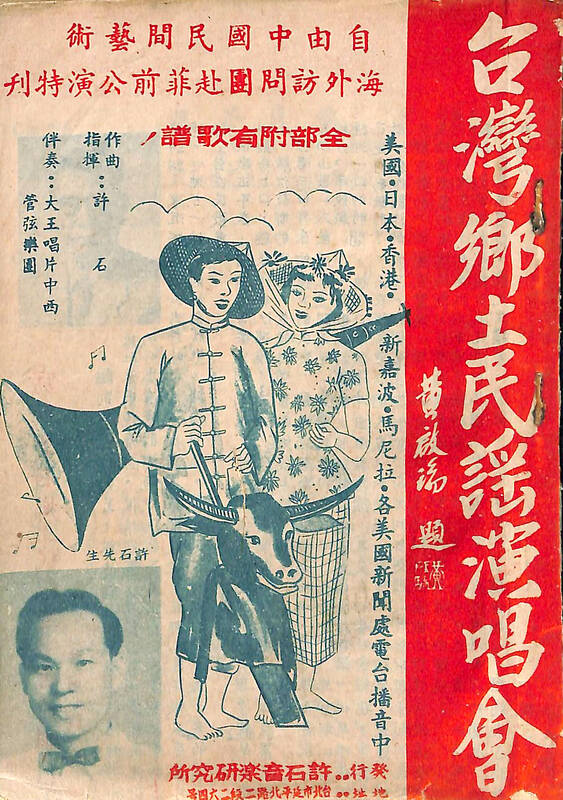
Photo courtesy of Kuo Chih Yuan Music Association

He saved up money and headed to Japan, where he finished high school and enrolled in the Japan College of Popular Music, graduating in 1942. He later recalled that most Taiwanese who could study music abroad were from wealthy families, while he was delivering newspapers and milk every morning and also working as a truck driver.

His professors, noted composers Nosho Omura and Kyosho Yoshida, urged him not to simply imitate Japanese music but to draw inspiration from Taiwan’s life and sounds. This, in addition to the student gathering incident, instilled in Hsu a strong sense of duty to uncover and express the music of everyday Taiwanese life, writes his son Charles Hsu (許朝欽) in a biography.

Hsu spent four years as a singer for the prestigious Moulin Rouge Shinjukuza Theater and the Toho Theater, before returning home in February 1946 to care for his ailing mother.

POP SUCCESS

Once back home, Hsu wasted no time composing Southern Nocturne (南都之夜), often hailed as Taiwan’s first post-war hit song. Its lyrics originally reflected Taiwan’s hardships, but were soon rewritten into a more politically palatable love song.

With the support of lyricist and Tainan City councilor Hsu Ping-ting (許丙丁), Hsu Shih toured the country that year to great acclaim. Hsu Ping-ting would later pen countless lyrics for Hsu Shih and remained a staunch advocate for his folk music endeavors.

Hsu Shih churned out numerous classics during this period, his favorite being Anping Reminiscence (安平追想曲), which tells the love story of Ms Chin (金) and a Dutch ship doctor. While teaching music in Tainan, Hsu often visited the Anping Old Fort (Zeelandia). One day he started chatting with an old man about local history, and learned about this tale.

The song was later recorded as a musical drama, featuring Hsu’s student and Taiwanese opera diva Yang Li-hua (楊麗花), who also starred in the 1972 movie adaptation.

And Streetlight at Midnight (夜半路燈) was based on his own courtship with Cheng Shu-hua (鄭淑華), the niece of his good friend and fellow composer Yang San-lang (楊三郎). Cheng lived in Taipei, and Hsu would often wait for her under the streetlight at Tainan Railway Station, dressed in a crisp suit. They married in 1951 and had eight children.

COLLECTING TAIWAN’S MELODIES

In the summer of 1947, Hsu and future star Wen Hsia (文夏), then a high school student, traveled to Pingtung County’s Hengchun Township (恆春). He asked the guesthouse owner for someone who could sing the folk epic Melody of Memory (思想起), and soon, the legendary wandering bard Chen Ta (陳達) showed up with his moon lute. This was two decades before musicologists “rediscovered” Chen and made him a household name (see “Taiwan in Time: Searching for their ‘musical mother tongue,’” Feb. 9, 2020).

In addition to modernization, these songs also suffered from the colonial ban on folk music from 1917 to 1925, and the later kominka assimilation policies. Plus, educated Taiwanese often found them vulgar and unrefined.

Hsu continued collecting folk music until around 1960, when in September he staged the “Fourteen Years of Folk Song Gathering” concert at Taipei’s Zhongshan Hall.

“I have a dream,” he said at one of his shows. “I want those Taiwanese folk songs that have been almost forgotten to once again burn in the hearts of the people of Taiwan”

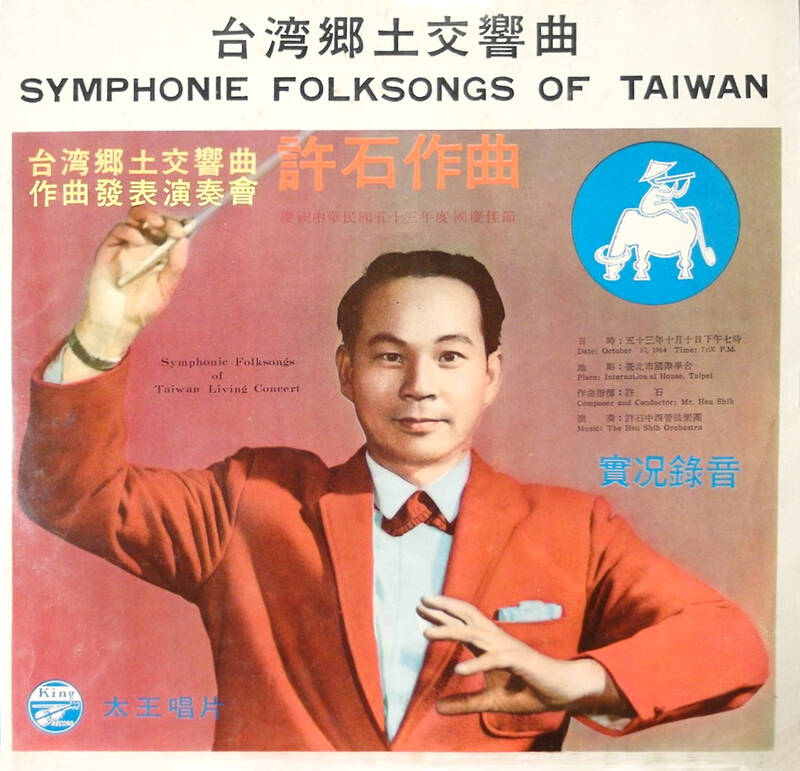
Hsu’s program was well received in Asia, but he wanted to take it a step further. In 1964, he premiered his magnum opus Symphonic Folk Songs of Taiwan (台灣鄉土交響曲), a nearly 40-minute orchestral piece blending Taiwanese instruments, hoping to carry the sounds of Taiwan to Western audiences.

LASTING LEGACY

Hsu devoted most of his earnings on his record companies and organizing shows, leaving the family in financial difficulties, yet his wife and children remained supportive.

Hsu’s final concert took place on Aug. 8, 1979 at Zhongshan Hall. He was in poor health and just had heart surgery, but he insisted on conducting the concert and was actively involved in every step. He wasn’t singing anymore due to his condition, but when the student who was meant to sing Anping Reminiscence ran late, the host asked him to sing it.

His family was worried, but Hsu finished the song, remarking, “It’s been so long, I almost forgot the words.”

He died the following year at the age of 62.

A notoriously strict teacher, Hsu trained numerous notable entertainers, including his daughters. The two eldest twins began performing as teenagers as the pop duo Taiwan Peanuts (台灣若比娜茲), and in 1970 three more sisters joined to form the Hsu Family Chinese Folk Song Band (許石中國民謠合唱團).

This was a time when the government was trying to suppress Taiwanese-language music, but they still found great success touring — especially in Japan. In 1972, the Hsu family was finally able to buy a house in Taipei. The band continued on for five years after Hsu’s death — further cementing his legacy.


Source link

Next Story
PTSGI Translation

PTSGI India: Professional Translation, Interpretation & Localization Services for Global Businesses

New DelhiPresident Translation Service Group International (PTSGI), headquartered in Taipei, is a leading provider of professional language translation services (145+ languages) since 1966, continues to expand its presence as a trusted partner for businesses seeking high-quality translation, interpretation, localization, subtitling, dubbing, voice-over, and multilingual content solutions across global markets.

With increasing demand for cross-border communication, regulatory documentation, and multilingual customer engagement, PTSGI supports organizations with accurate, industry-specific language solutions designed to help brands operate seamlessly across diverse languages and cultures.


Meeting the Growing Need for Multilingual Communication

As international business expands rapidly across industries, the need for precise and culturally aligned communication has become essential. PTSGI addresses this demand by delivering professional translation and interpretation services that align with global quality standards, ensuring clients maintain clarity, consistency, and compliance in every market.

From corporate communications to technical manuals, legal contracts, and multimedia content, PTSGI provides tailored solutions that meet both local and international requirements.


Comprehensive Language Services Under One Roof

PTSGI offers a complete portfolio of language services, including:

  • Professional Translation Services (145+ global languages)
  • Technical & Engineering Translation (HVAC, manufacturing, energy, IT, manuals)
  • Legal & Certified Translation
  • Interpretation Services (On-site, Remote, Conference Interpretation)
  • Localization Services (Websites, mobile apps, software, product content)
  • Subtitling & Captioning (Corporate videos, training modules, media content)
  • Dubbing & Voice-over Services (Multi-language studio solutions)
  • Transcription Services
  • Multilingual Desktop Publishing (DTP)

Each project is executed through a structured workflow that ensures linguistic accuracy, formatting consistency, and timely delivery.


PTSGI India

PTSGI’s India office is coordinated by Mr. Vivek Mishra, who serves as the key point of contact for both domestic and international clients.

Mr. Vivek Mishra oversees end-to-end project coordination, ensuring smooth communication, timely execution, and quality delivery across all service lines. He plays an active role in managing multilingual requirements for corporate, government, and industrial clients, supporting both recurring and high-volume projects with dedicated coordination.


Quality, Confidentiality & Client-Centric Execution

PTSGI differentiates itself through its commitment to quality assurance and professional project management. Every assignment undergoes careful review processes to ensure the highest level of accuracy and consistency.

Key strengths include:

Industry-specialized linguists & subject-matter experts
✅ Multi-step QA and proofreading process
✅ Secure and confidential handling of sensitive documents
✅ Scalable delivery model for bulk and recurring projects
✅ Fast turnaround options for urgent requirements
✅ Dedicated project coordination and responsive support


Supporting Industries Worldwide

PTSGI works with organizations across multiple sectors, including: Legal | Manufacturing | Engineering | HVAC | Energy | Healthcare | IT & Software | Government | Corporate & Marketing

Whether supporting multinational companies, SMEs, or public sector organizations, PTSGI enables clear communication and smoother international operations.


Useful Links

🌐 Website: https://www.ptsgi.com/en/
📩 Request a Quote: indmkt1@ptsgi.com


Contact for Business Enquiries

PTSGI India Office – Vivek Mishra
📍 Address: Spacetime, 1st Floor Office. 261, Lane no.5, Westend Marg, Saket, New Delhi, Delhi 110030
📞 Phone: +91 98711 82233, +91 11 47048089
📧 Email: indmkt1@ptsgi.com
🌐 Website: https://www.ptsgi.com/en/


About PTSGI

PTSGI is a professional language translation services provider delivering end-to-end multilingual solutions including translation, interpretation, localization, subtitling, dubbing, voice-over, and multilingual publishing. With a strong network of expert linguists and a structured quality assurance process, PTSGI helps organizations communicate effectively across borders and cultures.

Next Story
Taipei 101 Welcomes 2026 with a Spectacular New Year Fireworks Show

Taipei 101 Welcomes 2026 with a Spectacular New Year Fireworks Show

Taipei celebrated the arrival of 2026 with its annual New Year’s Eve countdown, climaxing in a dramatic six-minute fireworks show launched from Taipei 101, the iconic skyscraper dominating the city’s skyline.

Theme & Production: The 2026 display, titled “SPARK 101,” featured low-smoke pyrotechnics and was paired with synchronized music composed by young Taiwanese musicians. There were also special light projection segments, including tributes like a “Taiwan’s invisible heroes” theme shown on the tower’s façade before midnight.

Crowd & Celebrations: Tens of thousands of people gathered in Taipei’s Xinyi District and around City Hall Plaza despite rainy conditions to watch the performance and join the countdown festivities, which included concerts and cultural programming leading up to midnight.

Next Story

Experience the Hamamatsu and Lake Hamana Area: A Floral Wonderland for Unforgettable Moments[PR]| JAPAN Monthly Web Magazine

Shizuoka Prefecture, located in central Honshu between Tokyo and Nagoya, is a region rich in natural beauty. To its east stands Japan’s highest peak, Mount Fuji, while the Pacific Ocean stretches to its south. In the Hamamatsu and Lake Hamana area, the Hamanako Flower Festival is held every spring, offering visitors a chance to admire the vibrant flowers. The area also features attractions the whole family can enjoy, including a resort-style amusement park and a scenic ropeway that crosses the lake. It is even celebrated as a “destination where you can show your parents just how much you appreciate them.” Join us as we uncover the many charms of the Hamamatsu and Lake Hamana area, an ideal spot for making lasting memories.

Hamanako Flower Festival: A Celebration of Seasonal Blooms

With its abundant sunshine and mild climate, the Lake Hamana area in Hamamatsu City, Shizuoka Prefecture, is a haven for vibrant seasonal flowers. From March to June, the annual Hamanako Flower Festival brings the landscape to life, celebrating the beauty of nature in full bloom.

With the catchphrase “Spring in Japan begins at Lake Hamana,” the festival takes place at two main venues: Hamamatsu Flower Park and Hamanako Garden Park. The event offers a stunning relay-style display of flowers that bloom throughout each season, including Japan’s iconic cherry blossoms, tulips, nemophila, wisteria, and roses, attracting flower lovers from near and far.

Hamanako Flower Festival

Enjoy Seasonal Flowers at Hamamatsu Flower Park

Hamamatsu Flower Park, one of the main venues of the Hamanako Flower Festival, is a sprawling botanical garden covering 300,000 square meters. Home to around 3,000 plant species, it boasts breathtaking floral displays throughout the year.

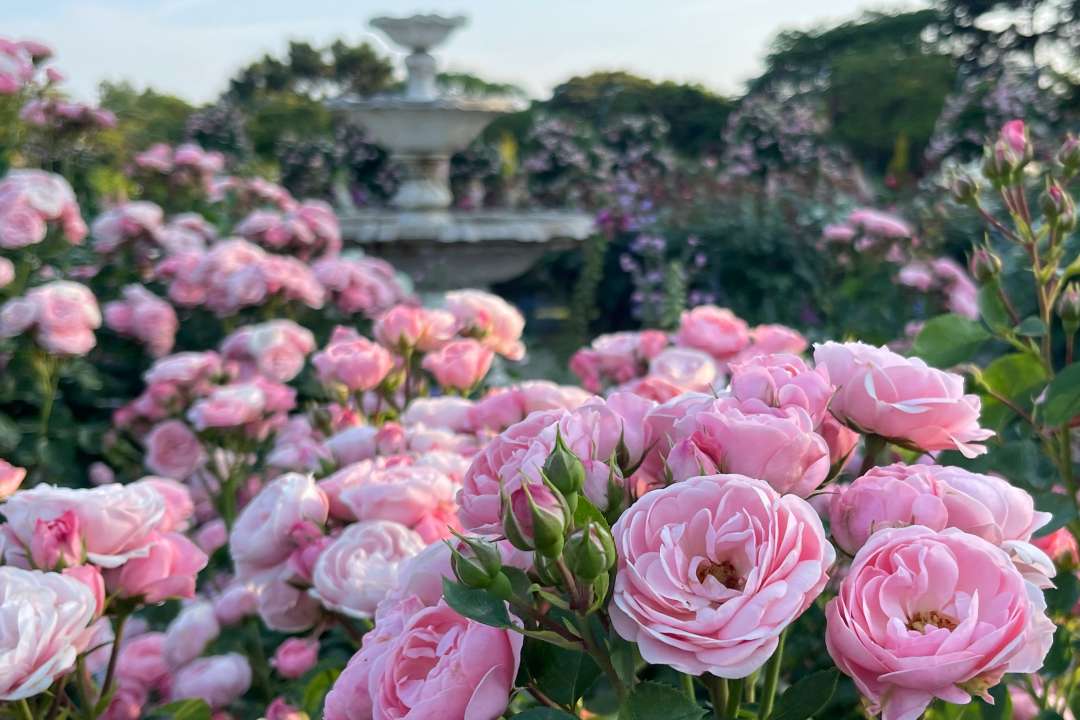
Rose Garden, Hamamatsu Flower Park

From mid-March to mid-April during the flower festival, the Tulip and Cherry Blossom Garden reaches its peak, with 1,300 cherry blossom trees and 500,000 tulips blooming simultaneously. This is the only garden in Japan where you can witness such a large-scale display of cherry blossoms and tulips.

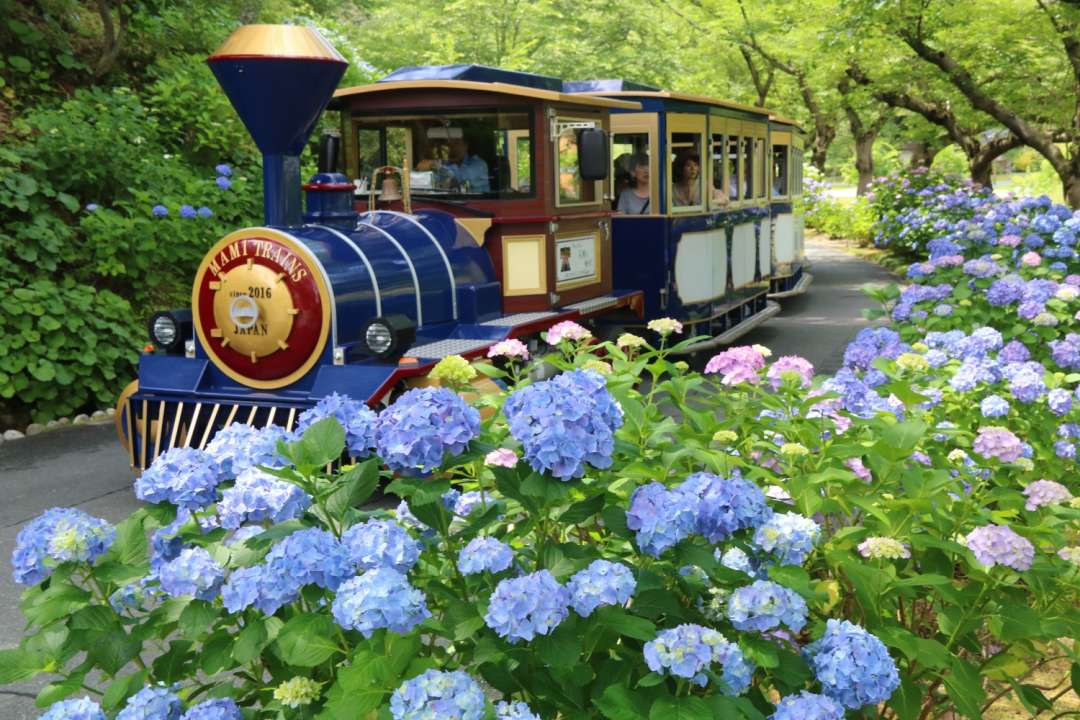
As spring transitions to early summer in late April to early May, the 170-meter-long Wisteria Corridor becomes a mesmerizing sight, especially when illuminated at night. In June, hydrangeas in shades of white, blue, and purple brighten the rainy season. The park also features a large greenhouse called the Crystal Palace, dynamic fountain shows synchronized with music, and the Flower Train bus, which offers a scenic ride through the park—making it a perfect destination for families.

Flower Train Bus at Hamamatsu Flower Park

Spectacular Flower Festival Scenes at Hamanako Garden Park

Hamanako Garden Park, the other main venue of the Hamanako Flower Festival, is a vast green space spanning approximately 56 hectares, offering expansive views of the natural beauty and open spaces of Lake Hamana.

From late March to mid-April, 10,000 tulips in 100 varieties blossom in striking colors, heralding the arrival of spring. Then, from mid to late April, around 300,000 nemophila flowers bloom to create an unforgettable sight, transforming the landscape into a vast blue carpet. The park also features a 50-meter-high observation tower, showcasing panoramic views of the entire garden park and Lake Hamana.

The Flower Garden, Hamanako Garden Park

Flower Museum, Hamanako Garden Park

Visitors can also discover rare flowers, such as the evergreen witchhazel, which blooms in April in Kosai City, adjacent to Hamamatsu. Found in only three locations in Japan, its delicate ribbon-like petals make it especially captivating. Another rarity is the shibukawa tsutsuji (jingu tsutsuji, Rhododendron sanctum), which blooms in May in Mikawa, parts of Mie Prefecture, and Hamamatsu. This rare flower thrives only in serpentine rock areas.

Evergreen Witchhazel

Jingu Tsutsuji (Rhododendron Sanctum)

Ryotanji Temple: A Legacy of 1,300 Years

According to temple records, Ryotanji Temple was founded by the priest Gyoki during the Nara period (710–794). From the Heian period (794-1185), it is said to have become the family temple of the Ii clan, a samurai lineage. The temple’s garden, designed by Kobori Enshu—a feudal lord and garden designer of the Edo period (1603–1867)—has been designated a national place of scenic beauty. It features numerous stone arrangements and artificial hills that depict cranes and turtles.
Ryotanji Temple also hosts seasonal flower events, including the Flower Festival in early April and the Satsuki(azalea) Festival from late April to May.

Ryotanji Temple

Ryotanji Garden by Enshu Kobori

Hamanako PalPal: A Resort-Style Amusement Park by the Lake

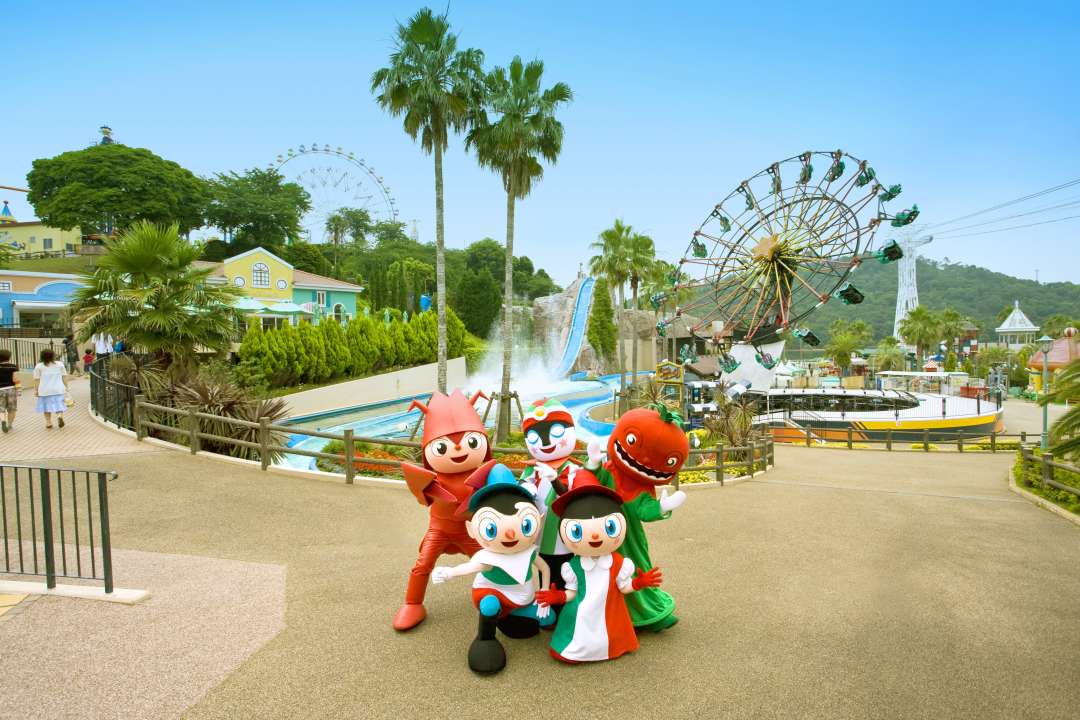
Located on the shores of Lake Hamana, Hamanako PalPal is a resort-style amusement park featuring around 30 attractions suited for all ages, from young children to adults. With a mix of fairy-tale-themed rides and thrilling extreme attractions, it’s a top destination for families and couples alike.

For an even more memorable experience, pair your visit with a ride on the Kanzanji Ropeway next door. Together, they offer a fun-filled way to take in the beauty of Lake Hamana.

Kanzanji Ropeway: Japan’s Only Ropeway Crossing a Lake

The Kanzanji Ropeway is the only ropeway in Japan that crosses a lake, traversing 723 meters in just four minutes. Below, the picturesque Lake Hamana stretches between the cities of Hamamatsu and Kosai in western Shizuoka Prefecture. The ropeway connects the Hamanako PalPal amusement park to the summit of Mount Okusa, offering a breathtaking 360-degree panoramic view throughout the ride.

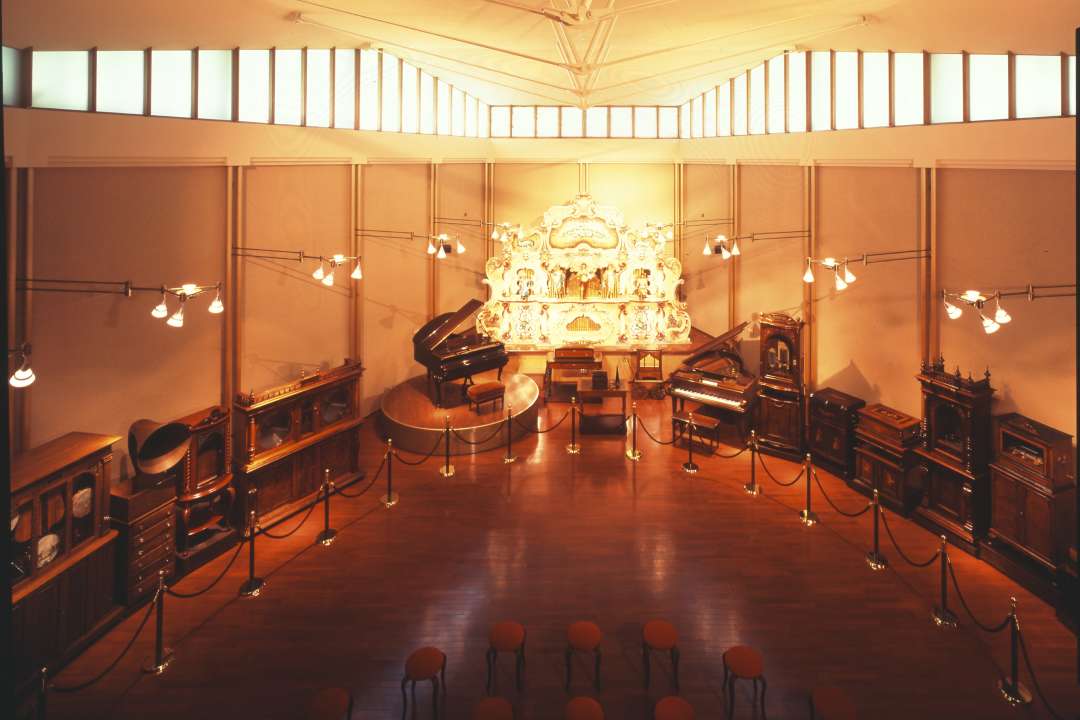
At the summit of Mount Okusa sits the Hamanako Orgel Museum, home to a collection of valuable music boxes. Visitors can admire the intricate displays and enjoy the enchanting sounds. From the observation deck, you can take in sweeping views of Lake Hamana and the Pacific Ocean—and on clear days, even Mount Fuji. The scenery transforms with the seasons and time of day, offering plenty of dynamic sights.

Hotel Wellseason Hamanako: Savor Local Flavors and Relax in Hot Springs

Located in the Kanzanji Onsen hot spring area, Hotel Wellseason Hamanako is a family-friendly resort facility designed to accommodate guests with babies and small children, ensuring a stress-free stay.

The hotel is directly connected to Hamanako PalPal, and guests enjoy free admission to the amusement park. For relaxation, hotel guests have exclusive access to the open-air bath Hitotoki no Yu, or can unwind at the adjacent Hanasaki no Yu.
The buffet-style meals highlight local specialties, including Lake Hamana’s famous unagi (eel), premium Mikkabi-brand Japanese beef, and Hamamatsu gyoza. These flavors are beloved by both visitors and locals alike.

How to get there

Hamamatsu is easily accessible from Tokyo or Osaka in about 90 minutes via the Shinkansen bullet train. For those traveling by air, Chubu Centrair International Airport is a convenient option. From Nagoya, the Shinkansen bullet train is a hassle-free way to reach Hamamatsu in just 30 minutes. Once at Hamamatsu Station, the Lake Hamana area is about a 50-minute bus ride away.

Source link

Next Story

Celebrate 30 Years of Indo-Japan Friendship at the Hyderabad Japan Festival 2025 This Weekend!

This weekend, Hyderabad will play host to a slice of Japan. The 30th annual Hyderabad-Japan Festival returns to the city on October 25 and 26, 2025, at the State Art Gallery, Madhapur. Entry is free and open to all. Expect Japanese martial arts demonstrations, folk dances, and live music bands in the Japanese tradition.

There will also be Kuchipudi performances, live demos of Ikebana (the art of flower arrangement), Bonsai, Sumie (Japanese ink painting), and Origami (the art of paper sculpting). Visitors can try their hand at the crafts while learning directly from experts. Exhibitions and workshops featuring calligraphy and painting to photography and design of both cultures.

The event is organized by Na Ra JAPAN HUB, an initiative of the Naga Rama Trust, founded by Dr. B. Ramabhadra and Mrs. Naganath. Having spent nearly two decades in Japan, the couple began this festival three decades ago to foster cultural understanding between India and Japan. What started as a modest gathering has now become one of Hyderabad’s most anticipated annual events.

Talks and Exchanges

The Hyderabad-Japan Festival has always been about learning what makes Japan’s culture, education, and lifestyle so admired around the world, and finding how it connects with Indian values. This year, there will be special sessions and talks on:

  1. The Japanese language and learning pathways for students in India
  2. Education and career opportunities in Japan
  3. Indo-Japan relations and city-level collaborations like that between Hyderabad and Hamamatsu City
  4. Insights into Japan’s productivity methods, work ethics, and the globally loved Ikigai philosophy

These sessions will help students, entrepreneurs, and professionals understand how collaboration between the two nations is growing in education, business, and culture.

The festival has strong institutional support from:

  • Consulate-General of Japan in Chennai
  • Japan Foundation, New Delhi
  • JETRO (Japan External Trade Organization), New Delhi
  • Hyderabad Japanese Association

What To Expect

Japanese art groups like the Ohara School of Ikebana (Hyderabad), Golden Dragons, and several individual masters of Bonsai, Origami, and Sumie will showcase their skills. School students will participate in Origami, Painting, and Japanese Speech contests. Winners will be recognized during the festival. Adding to the festival’s significance, several dignitaries and cultural leaders will be in attendance. Among them are: Kenji Miyata, Acting Consul General of Japan, Chennai; Koji Sato, Director General, Japan Foundation, New Delhi; Takeshi Suzuki, Director General, JETRO, New Delhi; Collector Smt. Harichandana, IAS; Former DGP Sri SK Jayachandra, IPS (Retd.). They will be joined by artists, educators, business leaders, and enthusiasts from both countries.

Source link

Join our newsletter
and stay up to date

fill this form to get mail from us.

join 1000+ people reading our newsletter