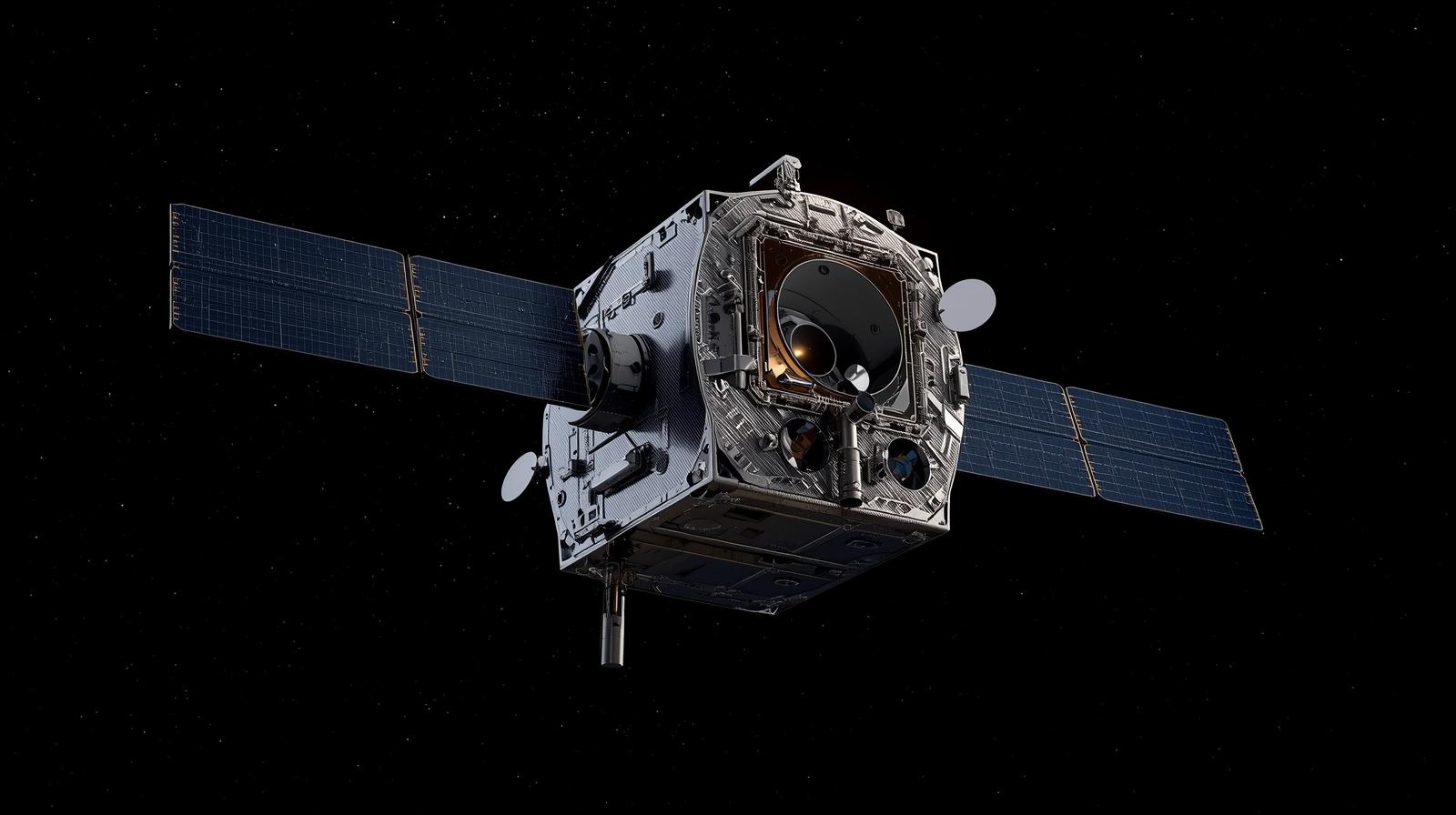
Taiwan is stepping into a new era of space capability. For the first time, the country is deploying a domestically developed satellite constellation — FORMOSAT-8 — and the maiden spacecraft, FS-8A, is already en route to its launch site. This mission marks a major milestone in Taiwan’s ambitions for independent Earth observation, disaster monitoring, and strategic technology development.
Here’s a deep dive into Formosat-8: what it is, why it matters, and where Taiwan is heading.
This official video from TASA (Taiwan Space Agency) offers a concise, visual overview of the Formosat-8 mission: its technical goals, satellite design, and envisioned impact.
What Is Formosat-8?
The Mission in Brief
-
Formosat-8 is Taiwan’s first fully domestic optical remote sensing satellite constellation.
-
The plan is for eight satellites: six with a “native” resolution of around 1 meter, and two with sub-meter resolution.
-
The first satellite, FS-8A (also dubbed the Chi Po-lin Satellite, 齊柏林衛星), left Taiwan for the U.S. in preparation for a launch in November 2025 aboard a SpaceX Falcon 9 rocket.
-
Manufacturing-wise, Taiwan has achieved a high degree of self-reliance: 84 % of the key components for FS-8A were designed, built, or assembled domestically.
Technical Features & Capabilities
-
The satellites will operate in a sun-synchronous orbit at roughly 561 km altitude.
-
After image post-processing, it’s expected that the system can discern features as small as 0.7 meters on Earth.
-
The constellation is designed to pass over Taiwan three times per day, enabling frequent revisits for updates.
-
Future satellites in the series may incorporate edge computing or onboard AI to pre-process data and improve efficiency.
Why It Matters
1. Strategic & Sovereignty Benefits
With a domestic satellite constellation, Taiwan gains more control over its remote sensing capabilities — reducing dependency on foreign systems for imagery, security, and intelligence needs.
TASA leadership has emphasized that FORMOSAT-8 will play a key role in national security, enabling detailed spatial intelligence.
2. Disaster Management and Environmental Monitoring
Taiwan is vulnerable to typhoons, landslides, and flooding. Formosat-8’s imagery can support real-time detection of environmental changes, vegetation stress, and areas impacted by disasters, improving response time and planning.
3. Technological & Industrial Growth
By pushing the domestic component share and capabilities, Taiwan aims to foster a high-tech space industry ecosystem — from sensors to payloads, assembly to testing.
This also fits into their third-phase space development plan, projecting the constellation’s completion by 2031.
Timeline & Milestones
| Year | Milestone |
|---|---|
| 2025 | Launch of FS-8A (November) |
| 2025–2031 | Annual launches to fill out the 8-satellite constellation |
| 2031 | Expected full operational capacity of FORMOSAT-8 |
Challenges & Considerations
-
Launch dependency: Although telescopes, sensors, and components are domestically produced, Taiwan still relies on partners (e.g., SpaceX) for launch services.
-
Data handling & bandwidth: The volume of high-resolution imagery demands robust ground stations, data processing pipelines, and possibly onboard data reduction to manage bandwidth.
-
Sustainability & maintenance: As with all Earth-observation systems, long-term success depends on satellite longevity, redundancy, and maintenance plans.
-
International cooperation: To maximize impact, Taiwan may need data-sharing agreements or collaborations (e.g., Sentinel Asia) to bolster its scientific and environmental goals.
What’s Next
-
The first satellite (FS-8A) should launch in November 2025 from Vandenberg Space Force Base.
-
Subsequent satellites will follow annually until the constellation is complete by 2031.
-
As more satellites come online, revisit frequency, global coverage, and data richness will scale up.
Conclusion
The Formosat-8 project isn’t just a satellite launch — it’s a statement of Taiwan’s ambitions in space autonomy, resilience, and technological maturity. By 2031, this constellation could become a backbone for Taiwan’s environmental, defense, and scientific infrastructure. The journey starts now, and FS-8A is the vanguard.