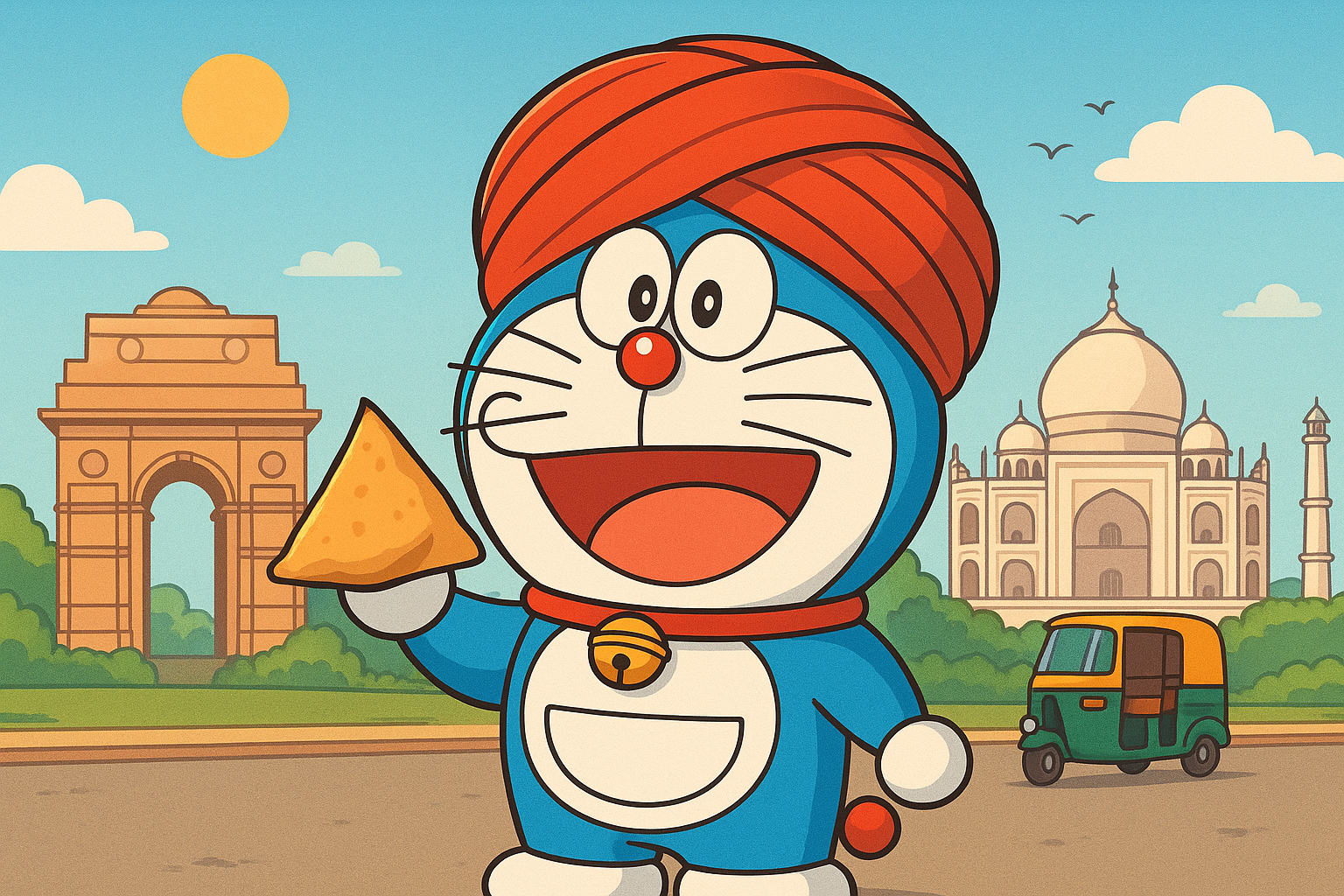
When it comes to Japanese cartoons in India, no character has captured the hearts of children quite like Doraemon. This blue, earless robotic cat from the future is not only a household name but also a cultural bridge between Japan and India. For almost two decades, Doraemon has entertained, educated, and inspired millions of young viewers across the country. Its incredible popularity makes Doraemon arguably the most famous Japanese cartoon character in India.
The Origins of Doraemon
Doraemon was created by the Japanese manga artist duo Fujiko F. Fujio in 1969. Originally a manga series, Doraemon was soon adapted into an animated series that went on to become a global sensation. The story revolves around Doraemon, a robotic cat sent back in time from the 22nd century by a young boy named Sewashi to help his ancestor Nobita Nobi, a lazy and unlucky schoolboy. Doraemon’s task is to make Nobita’s life easier and guide him towards a brighter future.
Armed with a magical “4D pocket” filled with futuristic gadgets, Doraemon assists Nobita in solving everyday problems. However, Nobita’s misuse of these gadgets often leads to comical chaos. The mix of humor, heartwarming lessons, and imagination is what makes the series so relatable for children across cultures.
Arrival in India
Doraemon first appeared on Indian television in 2005, when it was aired on Hungama TV, and later became a staple on Disney Channel and Disney XD. The Hindi dubbed version, with its lively and funny dialogues, was an instant hit. The Hindi voice actors added a uniquely Indian flavor to the show, making it even more entertaining and accessible to local audiences.
Soon after its launch, Doraemon overtook other cartoons in popularity. While Western shows like Tom and Jerry, Scooby-Doo, and Looney Tunes were still watched, Doraemon carved out a special place by offering relatable storytelling with a touch of fantasy.
Why Doraemon is So Popular in India
Several factors explain why Doraemon stands out as the most beloved Japanese cartoon character in India:
-
Relatable Characters – Nobita’s laziness, fear of exams, and struggles at school resonate with Indian children who face similar challenges. Doraemon’s gadgets act as a dream solution to problems every child wishes they could escape.
-
Gadget Fascination – Doraemon’s gadgets like the “Anywhere Door,” “Time Machine,” and “Bamboo Copter” fascinate young audiences, feeding their imagination. Children in India often dream of using these gadgets in real life.
-
Cultural Adaptation – The Hindi dubbing, filled with jokes and witty lines, localizes the content without losing its Japanese essence. This makes it appealing to a wider Indian audience.
-
Moral Lessons – Despite the fun and mischief, each episode carries a lesson—whether about honesty, friendship, or hard work—which resonates with parents as well.
-
Mass Reach – Doraemon is available in multiple Indian languages including Hindi, Tamil, Telugu, and Bengali, giving it pan-India appeal.
Credit:Netflix India
Doraemon’s Impact on Indian Pop Culture
Over the years, Doraemon has become more than just a cartoon character; it is now a cultural phenomenon in India. Merchandise such as toys, school bags, lunch boxes, and even birthday cakes featuring Doraemon are widely popular among children.
The character has also inspired creative storytelling among kids. For example, many children imagine their own versions of Doraemon’s gadgets or invent new ones. This not only sparks creativity but also encourages a love for science and technology.
In fact, Doraemon has sometimes been called a “friend of every Indian child,” thanks to the comforting and helpful role it plays in Nobita’s life, which mirrors the bond children feel with the character.
Comparisons with Other Japanese Cartoons in India
While other Japanese cartoon characters like Shinchan, Pokémon’s Pikachu, and Dragon Ball Z’s Goku also enjoy immense popularity, Doraemon remains the most enduring and universally loved. Shinchan appeals mainly through humor, while Pokémon and Dragon Ball Z attract slightly older audiences. Doraemon, however, cuts across age groups—children adore him, and parents appreciate the values the show conveys.
A Global Ambassador of Japanese Anime
In Japan, Doraemon is considered a cultural icon and was even appointed as the country’s first “anime ambassador” by the Japanese Foreign Ministry in 2008. In India, this recognition translates into Doraemon being the face of Japanese animation for millions. For many Indian children, Doraemon was their first introduction to Japanese culture, storytelling, and creativity.
Conclusion
In the vast world of cartoons, Doraemon holds a special place in India’s heart. With its perfect mix of humor, imagination, and life lessons, Doraemon has become more than just a character on screen—it is a companion to children, a source of entertainment, and a subtle teacher of values.
For Indian kids, Doraemon is not just a blue robotic cat from Japan. He is a friend, guide, and hero who has been making childhoods brighter for nearly two decades. And as new generations of children continue to grow up watching him, Doraemon’s popularity in India shows no signs of slowing down.