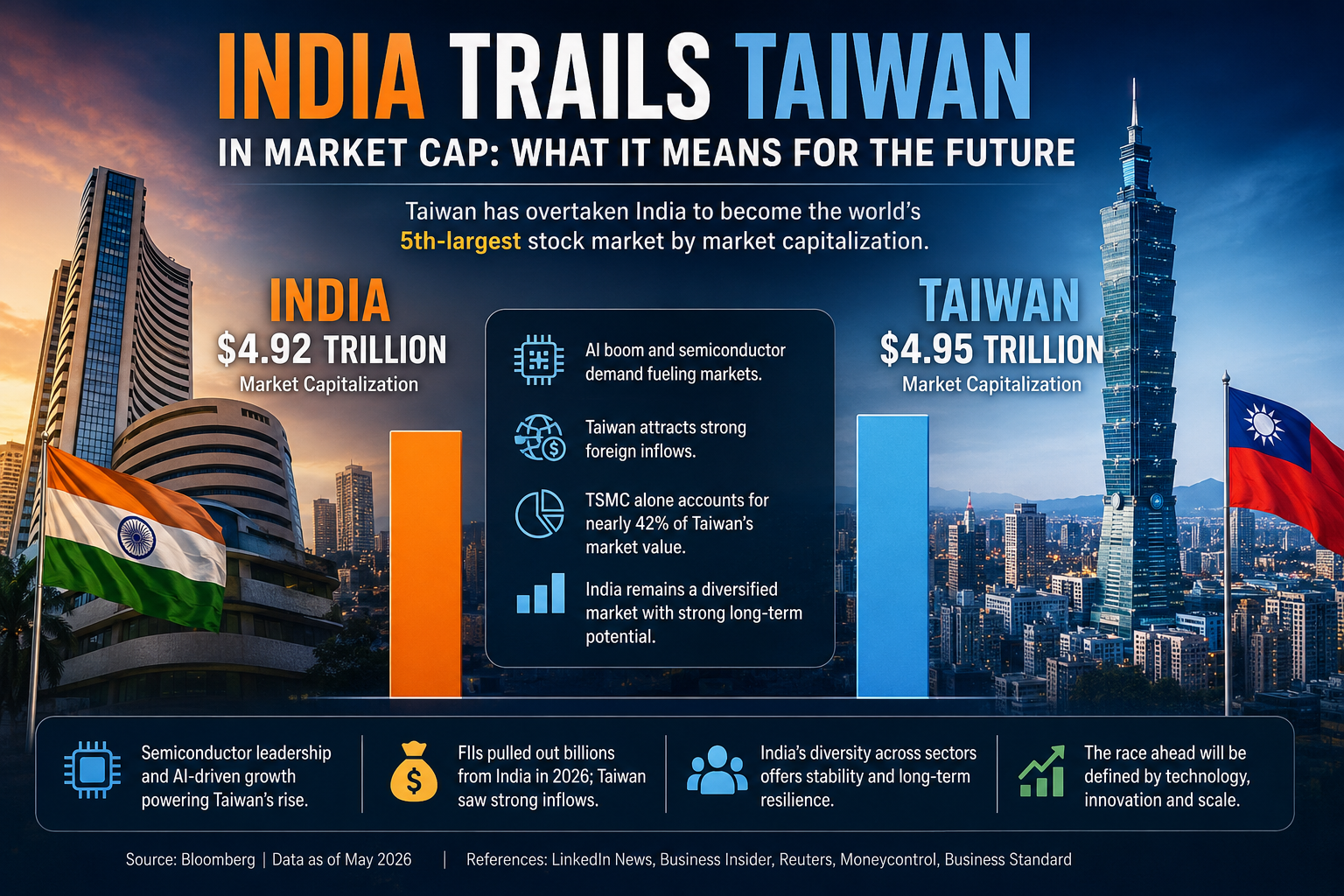
India, with its rapidly growing economy, has emerged as a key player on the global stage, seeking investment opportunities beyond its borders. One of the most promising avenues that has come into focus is Taiwan, particularly its capital, Taipei. This vibrant city is not only a technological hub but also a gateway for Indian businesses to enter the Asia-Pacific market. This article explores the investment opportunities that exist between India and Taipei, underlining the economic, geopolitical, and cultural factors that make this relationship increasingly significant.
The Current Economic Landscape
As of 2023, India’s economy is estimated to grow at a rate of 6.1%, making it one of the fastest-growing major economies in the world. With a GDP of over $3 trillion, India is projected to become the third-largest economy by 2027. This growth creates an attractive environment for foreign investment. According to the Department for Promotion of Industry and Internal Trade (DPIIT), India attracted $83.57 billion in foreign direct investment (FDI) during the financial year 2020-2021, and this figure continues to rise.
On the other hand, Taiwan is known for its high-tech industries and manufacturing capabilities. It consistently ranks as one of the most competitive economies in the world. Moreover, Taiwan’s strategic location in East Asia serves as a springboard for international trade, making Taipei an appealing destination for Indian investors.
Geopolitical Dynamics
The geopolitical landscape in Asia is rapidly changing, with China asserting its dominance in the region. Both India and Taiwan are looking to diversify their economic partnerships to counterbalance Chinese influence. The Indian government has been proactive in engaging with Taiwan, looking to strengthen ties that align with its “Act East” policy. In recent years, Taiwanese businesses have increasingly viewed India as a viable investment destination due to its large consumer market and growing middle class, which is projected to reach 500 million by 2030.
Furthermore, collaborative ventures in technology, agriculture, and education have become focal points of the India-Taiwan relationship. In 2022, the two countries signed a landmark agreement to enhance cooperation in areas like semiconductors, electronics, and trade.
Sectors of Opportunity
Technology and Information Technology (IT): Taiwan is home to major technology firms, including TSMC (Taiwan Semiconductor Manufacturing Company), one of the largest semiconductor manufacturers globally. India’s IT sector has flourished over the years, boasting companies like TCS, Wipro, and Infosys. Joint ventures in IT services, software development, and semiconductor manufacturing can provide substantial economic benefits for both nations.

Manufacturing: India’s “Make in India” initiative aligns perfectly with Taiwan’s manufacturing prowess. With rising labor costs in China and a shift in global supply chains, many Taiwanese companies are looking to relocate or diversify their manufacturing bases to countries like India. The Indian government offers various incentives for foreign manufacturers, making it an attractive destination.
Education and Skill Development: Taiwan possesses a strong education system, particularly in technical fields. Collaborations between Indian and Taiwanese educational institutions can enhance skill development in India, particularly in STEM fields. With a young population, India stands to benefit significantly from such partnerships.
Renewable Energy: Both countries are increasingly focused on sustainable development and renewable energy. India aims to achieve 500 GW of renewable energy capacity by 2030. Investments from Taiwanese companies specializing in solar technology, wind energy, and battery storage can play a crucial role in achieving these targets.
Agricultural Technology: Taiwan is known for its advances in agricultural technology. With India being primarily an agrarian economy, collaborations in the agri-tech sector can result in increased productivity and sustainability.
Investment Figures
According to Taiwan’s Ministry of Economic Affairs, as of 2021, Taiwanese investments in India reached around $1.5 billion. Major Taiwanese companies, including Foxconn, MediaTek, and ASUS, have already made significant investments in various sectors. The Indian government aims to increase Taiwanese investment in India to $7 billion within the next five years.
In contrast, Indian companies have also begun to invest in Taiwan, particularly in sectors like IT, textiles, and pharmaceuticals. For instance, Indian IT companies have established several development centers in Taipei, employing local talent and contributing to the local economy.
Challenges Ahead
Despite these opportunities, several challenges remain. The ongoing geopolitical tensions between China and Taiwan create an uncertain investment environment. Indian businesses may be wary of entering the Taiwanese market due to fears of possible repercussions from China.
Bureaucratic hurdles in both countries can also pose challenges. While India has made significant strides in easing FDI norms, Taiwanese companies often encounter a complicated regulatory framework when trying to invest in India.
Moreover, cultural differences and language barriers can impact the effectiveness of communication and collaboration between Indian and Taiwanese firms. However, despite these challenges, the potential rewards make the effort worthwhile.
Cultural Exchange and People-to-People Ties
Cultural ties between India and Taiwan have deepened in recent years, facilitated by educational exchanges and tourism. Various cultural festivals and exhibitions have been organized to promote mutual understanding. The increasing number of Indian students choosing Taiwanese institutions for higher education highlights the growing people-to-people connections.
Conclusion
The eye-catching investment opportunities that exist between India and Taipei represent a promising avenue for both nations as they seek to expand their economic horizons. With a shared vision for growth, backed by strategic partnerships in various sectors, the future looks bright for collaborations between India and Taiwan. As they navigate challenges and leverage each other’s strengths, this budding relationship is likely to reshape the economic landscape in Asia and beyond.
As both countries continue to strengthen their diplomatic and economic ties, the partnership could serve as a model for other nations looking to foster international collaboration in the post-pandemic world. The time is ripe for Indian entrepreneurs and businesses to seize the opportunities that Taipei presents, paving the way for a prosperous bilateral relationship for years to come.