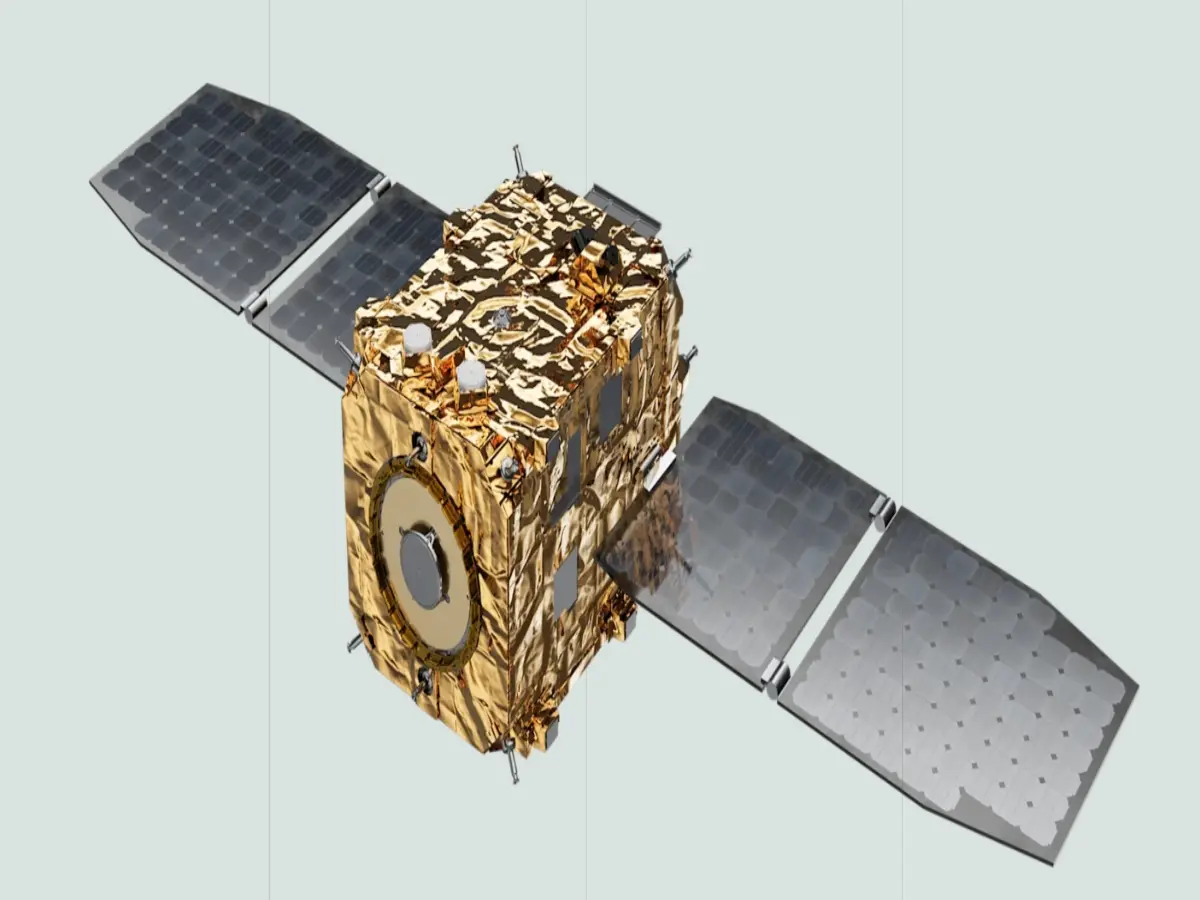
In a first, a Japanese firm has procured an entire Indian PSLV rocket to carry its ISSA-J1 satellite to space. ISSA-J1 stands for In-situ Space Situational Awareness-Japan 1 mission. Space Situational Awareness(SSA) is similar to traffic monitoring, it is the ability to detect, track, understand, and predict the location and behaviour of objects in space. This includes active satellites, defunct satellites, space debris, among others. With orbits near earth getting overpopulated with new satellites and debris, SSA is critical for the safe and sustainable use of space. Tracking and monitoring of space objects can be done from the Earth or using special satellites, ISSA-J is of the latter category.
This launch-related announcement was made by Astroscale Japan, a subsidiary of Astroscale Holdings Inc. Astroscale offers various technological solutions to monitor and remove space debris, make space more sustainable by extending life of satellites, and safely disposing defunct ones.
Astroscale said that it has signed a launch agreement with the Indian Government’s NewSpace India Limited(NSIL), which is the commercial arm of ISRO. The Japanese spacecraft is scheduled to be launched on the Polar Satellite Launch Vehicle (PSLV) from the Indian Spaceport Satish Dhawan Space Center in spring 2027.
ISSA-J1 is being developed under the Small Business Innovation Research (SBIR) program, sponsored by Japan’s Ministry of Education, Culture, Sports, Science and Technology. The SBIR program was established to promote research and development for Japanese startups and organizations engaged in advancing innovative technologies, and to facilitate the smooth implementation of results through government support.
The ISSA-J1 mission, built on Astroscale’s heritage in rendezvous and proximity operations, inspection and characterization capabilities, will diagnose and inspect two large satellite debris in orbit. ISSA-J1 is now in the final stages of design, with manufacturing of flight components and operational planning underway. Assembly and testing are scheduled to begin in the coming months in preparation for the 2027 launch, said the firm.
“We selected NSIL after thorough evaluations of more than ten launch service providers over the past year, considering technical capabilities, track record, cost and other elements,” says Eddie Kato, President & Managing Director of Astroscale Japan. PSLV is one of the world’s leading rockets for low Earth orbit, demonstrating approximately 60 successful launches. This marks the first time a Japanese entity has procured a dedicated PSLV launch, he added.
Beyond paying the Indian government to launch its satellite, Astroscale is also working on advancing its business enterprise in the Indian market.
Astroscale has inked MoUs with Indian space startups Bellatrix, Digantara, to jointly explore and develop the market, and through our local representative, MEMCO Associates.
“We are actively fostering collaboration in the Indian space ecosystem from both the “sell” and “buy” Initiatives. I had a privilege of introducing this initiative during the India-Japan Economic Forum held at the end of August, which was graced by the presence of Prime Minister Modi of India and Prime Minister Ishiba of Japan. We expect this agreement with NSIL to significantly contribute to those efforts,” Kato added.