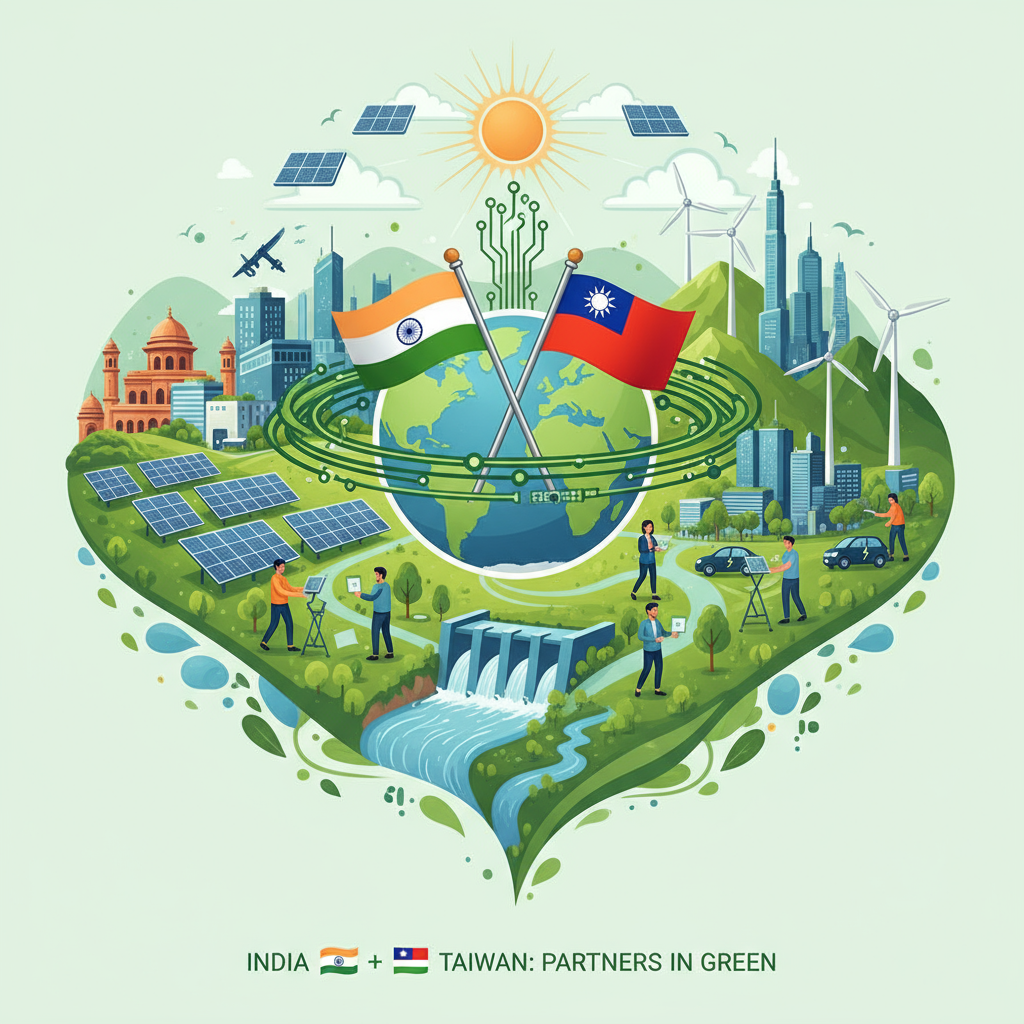
In recent years, the global emphasis on sustainable development has galvanized nations to explore collaborative avenues for implementing green technologies. Among the forerunners of this movement are India and Taiwan, two nations with contrasting yet complementary strengths. India’s ambitious sustainable development goals and Taiwan’s technological prowess create a fertile ground for effective joint initiatives aimed at addressing climate change and promoting environmental sustainability. This article delves into various collaborative efforts between India and Taiwan in the sphere of green technologies.
The Context of Sustainable Development in India and Taiwan
India
India, with its vast population and diverse ecosystems, faces significant challenges related to climate change, pollution, and resource management. The Indian government has set forth ambitious targets under the Paris Agreement, aiming to reduce greenhouse gas emissions and increase the uptake of renewable energy sources to 500 GW by 2030. The nation is also focusing on afforestation, sustainable agriculture, and the promotion of electric vehicles (EVs) as part of its Nationally Determined Contributions (NDCs).
Taiwan
Taiwan, on the other hand, is recognized for its advanced technological capabilities and innovations in the green tech sector. The government has rolled out initiatives to transition away from nuclear energy and fossil fuels towards renewable energy sources such as solar and wind. Taiwan’s commitment to sustainability is evident in its plans to achieve 20% of energy generation from renewable sources by 2025.
The Intersection of Goals
The alignment of sustainable development goals between India and Taiwan not only enhances bilateral ties but also paves the way for shared technological innovations. By collaborating, both nations can benefit from mutual strengths—India’s diverse ecosystems and untapped renewable resources, coupled with Taiwan’s technological advancements and manufacturing capabilities.
Key Areas of Collaboration
1. Renewable Energy
One of the most prominent sectors for joint initiatives is renewable energy. India and Taiwan have focused on solar energy projects, which have become a must-have in the energy mix for both countries.
Solar Energy Initiatives
India benefits from an abundance of sunlight, making it a prime candidate for solar power projects. Taiwanese companies have established partnerships with Indian firms to develop solar panels and other related technologies. In addition, both countries have been exploring joint investments in solar farms. The collaboration aims to drive down costs and boost the local manufacturing capacity for solar components through technology transfer.
2. Electric Vehicles and Transportation
With air pollution levels rising alarmingly in urban centers, the promotion of electric vehicles (EVs) has emerged as a focal point in both countries.
Joint Research and Development
Taiwan’s expertise in electronics and battery technology complements India’s growing demand for EVs. Joint R&D initiatives have been initiated to develop efficient batteries and charging infrastructure. Moreover, Taiwanese automotive firms have begun setting up production units in India, creating jobs and reducing costs.
3. Smart Cities
The smart city initiative is another area where India and Taiwan aspire to collaborate to enhance urban sustainability.
Technological Solutions
Taiwan’s advanced ICT infrastructure can help Indian cities in implementing smart solutions for waste management, water conservation, and energy efficiency. Collaborative projects include the deployment of smart sensors and data analytics tools to better manage urban resources.
4. Agriculture and Food Security
Sustainable agricultural practices are essential for food security, especially in India, where a significant portion of the population relies on agriculture.
Green Technology Adoption
India is using Taiwan’s advanced technologies in precision farming, which involves the use of sensors, drones, and data analytics. These technologies help farmers make informed decisions regarding crop management while minimizing the use of chemicals and water. Joint initiatives focus on research in drought-resistant crops and bio-pesticides, enhancing agricultural resilience to climate change.
5. Climate Adaptation and Disaster Management
As both countries face the repercussions of climate change, initiatives aimed at climate adaptation and disaster management are imperative.
Collaboration in Resilience Planning
Taiwan has significant experience in disaster preparedness, especially in typhoon management. India can benefit from Taiwanese best practices in developing resilient infrastructure and emergency response planning. Joint workshops and simulations can prepare both nations to respond effectively to climate-induced disasters.
6. Waste Management and Circular Economy
Waste management and circular economy initiatives are rapidly gaining importance in both countries.
Technological Innovations
Taiwan is recognized for its effective waste management practices and recycling technologies. Joint collaboration can help India advance its waste management systems, particularly in urban settings. Initiatives can include the development of smart waste bins equipped with sensors for better tracking of recyclable materials and composting technologies.
Challenges and the Road Ahead
While the landscape for collaboration in green technologies is promising, several challenges must be addressed.
Policy and Regulatory Hurdles
Divergent regulatory frameworks can create discrepancies in the smooth implementation of joint initiatives. Harmonizing policies related to energy, technology transfer, and trade will require sustained dialogue between both nations.
Financing and Investment
Securing funding for large-scale projects can be challenging. Both governments can explore mechanisms for facilitating investments, such as public-private partnerships (PPPs) and technology grants.
Cultural Differences
Cultural differences may also play a role in collaboration. Awareness and appreciation of each other’s practices will be vital for fostering a productive working relationship.
Conclusion
The joint initiatives between India and Taiwan present a promising pathway for addressing shared challenges in sustainable development through green technologies. Their collaborative efforts in renewable energy, transportation, smart city development, agriculture, climate adaptation, and waste management can not only enhance bilateral relations but also create scalable models for other nations facing similar challenges. By tapping into technological advancements and aligning their sustainability goals, India and Taiwan can make significant strides in combating climate change while promoting economic growth and social welfare. As both nations continue to work together towards a sustainable future, the fruits of their collaboration will not only benefit their citizens but also set an example for the global community in the pursuit of sustainable development.