Japan Korea Taiwan China

Flu Outbreak Sweeps Japan, Hospitals Overwhelmed, Schools Close

Japan flu outbreak

Japan has declared a nationwide influenza epidemic following an unusually early and explosive surge in cases, a full five weeks ahead of the typical flu season, raising fears that the virus may be evolving faster than before.

The outbreak has forced dozens of schools to close and left hospitals struggling to cope with overflowing wards, reviving memories of the pandemic years, reported several Japanese media.

According to Japan’s Ministry of Health, till October 3, more than 4,000 people had been hospitalised with influenza, a fourfold increase from the previous week. At least 135 schools and childcare centers across the country have been temporarily shut to contain the spread.

Health experts say this year’s flu wave is not only early but unusually aggressive. “The flu season has started really early this year, but in the changing global environment this might become a more common scenario,” Professor Yoko Tsukamoto of the Health Sciences University of Hokkaido was quoted as saying. “People need to take common-sense precautions, get vaccinated, wash hands regularly, and avoid spreading infection.”

Tsukamoto warned that global travel and population movement may be accelerating the virus’s ability to adapt to new environments. Japan’s early surge, she noted, mirrors patterns emerging in other parts of the world, suggesting influenza strains could be evolving to spread more efficiently or resist standard treatments.

The Health Ministry confirmed that the national average had crossed the epidemic threshold, with 1.04 patients per medical institution. Outbreaks have been particularly severe in Okinawa, Tokyo, and Kagoshima, while Yamagata Prefecture reported the closure of an entire primary school after 22 of its 36 pupils tested positive for influenza-like symptoms.

With flu cases expected to peak sooner than usual, authorities are urging people, especially the elderly, young children, and those with pre-existing conditions, to get vaccinated immediately. “For most healthy individuals, the flu may be unpleasant but not dangerous. But for vulnerable groups, early vaccination is crucial,” Tsukamoto said.

Hospitals nationwide are reporting crowding reminiscent of the Covid-19 crisis, with waiting rooms filled and staff shortages worsening the strain. Officials are urging people to avoid unnecessary visits to hospitals and instead consult doctors early if symptoms appear.

Travel experts have also warned foreign visitors to take precautions as Japan continues to experience record tourism. “Even if the strain differs from that in other countries, hygiene measures like mask-wearing and regular handwashing can go a long way,” said a travel marketing analyst based in Tokyo Ashley Harvey, as quoted by scmp.com.

Authorities have not yet reintroduced any major restrictions but have advised schools and workplaces to consider flexible attendance policies.
Source link

Next Story
EVA Air to Launch Direct Taipei–Delhi Flights from December 1, 2026

EVA Air to Launch Direct Taipei–Delhi Flights from December 1, 2026

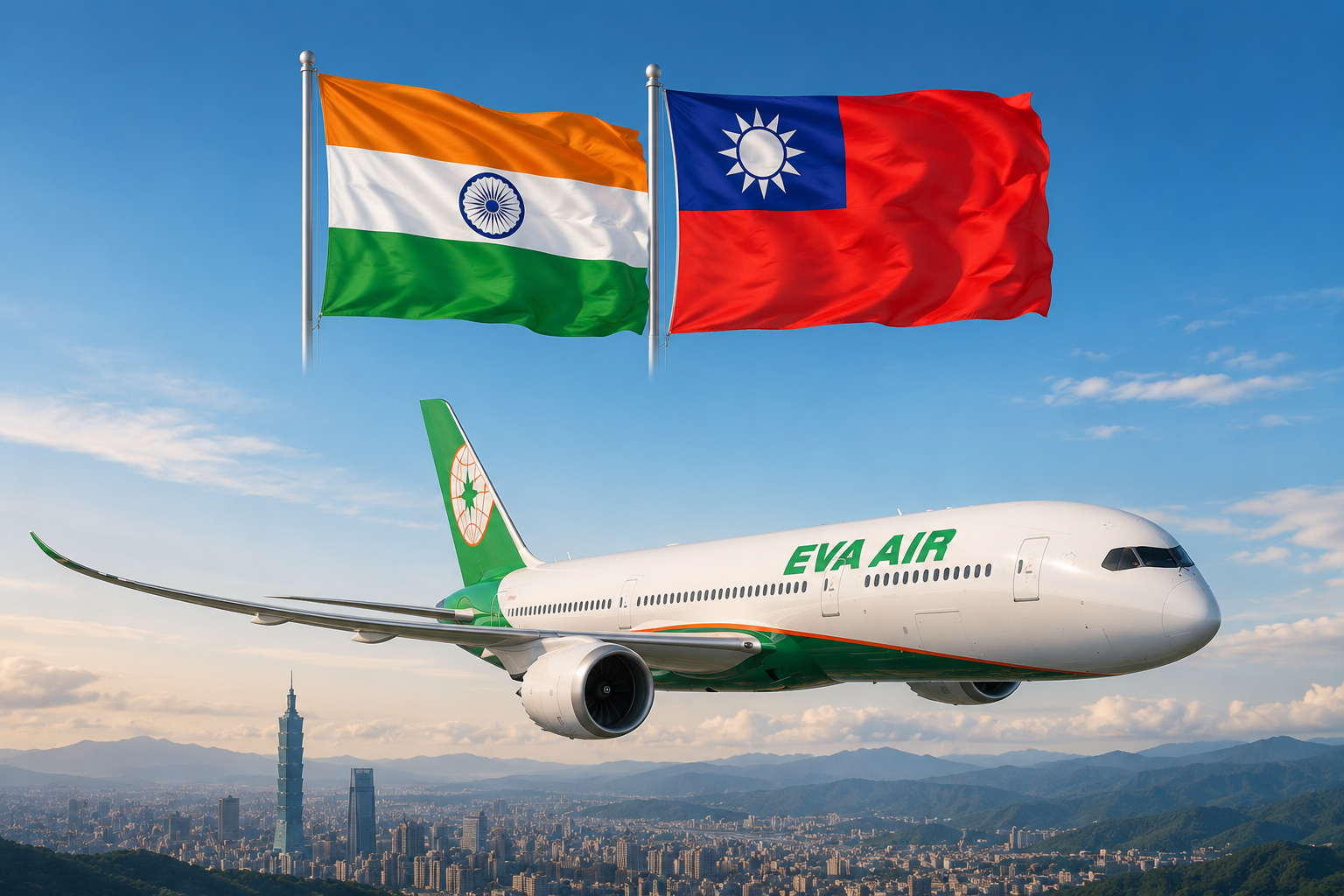
Travel between Taiwan and India is set to become more convenient as EVA Air officially announces a new nonstop service connecting Taipei and Delhi, beginning December 1, 2026.

The new route is an important development for business travelers, students, tourists, and companies operating between Taiwan and India. It will also strengthen Taipei’s role as a connecting hub for travelers from India heading onward to North America and other destinations across Asia.

Five Weekly Flights Between Taipei and Delhi

EVA Air will operate the new Taipei–Delhi route five times a week using Airbus A330-300 aircraft.

The service will operate under the following flight numbers:

  • Taipei to Delhi: BR367
  • Delhi to Taipei: BR368
  • Frequency: Five flights per week
  • Aircraft: Airbus A330-300
  • Service begins: December 1, 2026

According to EVA Air’s published schedule, BR367 will depart Taipei at 11:00 and arrive in Delhi at 15:35. The return flight, BR368, will depart Delhi at 19:55 and arrive in Taipei at 04:20 the following day. Flight schedules remain subject to change, so travelers should check the airline’s latest timetable before booking.

A New Direct Link Between Taiwan and India

Until now, travelers flying between Taipei and Delhi generally needed to connect through another Asian or international gateway. The new nonstop service removes the need for a connecting flight and is expected to make travel between the two markets considerably more straightforward.

EVA Air says the new route responds to growing economic connections between Taiwan and India, particularly in areas such as manufacturing, semiconductors, artificial intelligence, and technology.

This could be particularly useful for companies with operations, suppliers, employees, or business partners in both markets.

More Convenient Connections to North America

The route is also strategically important beyond the Taiwan–India market.

EVA Air operates an extensive network from its Taipei hub to destinations across North America. The airline says the new Delhi service will provide Indian travelers with another option for connecting through Taipei when traveling to the United States and Canada.

For eligible Indian nationals traveling to the United States or Canada, EVA Air also highlights Taiwan’s conditional visa-waiver transit arrangements as an additional potential benefit for qualifying travelers. Travelers should verify their individual eligibility and current entry requirements before planning a transit through Taiwan.

Connectivity Beyond Delhi

The new route could also benefit travelers whose final destination is outside India’s capital.

EVA Air has highlighted its partnership with Air India, a fellow Star Alliance member, which can provide onward connectivity from Delhi to other major Indian cities. This creates the possibility of combining EVA Air’s international network with connections within India.

For travelers from Taiwan, Delhi can likewise serve as an entry point to India’s broader domestic network.

Why the Route Matters for Business

The new connection comes at a time when commercial relationships between Taiwan and India are expanding.

Taiwanese companies have increasingly developed interests in India’s manufacturing, electronics, technology, and semiconductor sectors, while Indian companies and professionals are also becoming more engaged with Taiwan’s technology ecosystem.

A direct flight can make a meaningful difference for frequent business travelers. Eliminating a connection can reduce overall journey complexity, make business trips easier to schedule, and provide more predictable travel between the two markets.

For companies working across Taiwan and India, improved air connectivity may also support more frequent face-to-face meetings, technical visits, training programs, conferences, and business development activities.

A Positive Development for Tourism and Education

The route is not only relevant to business travelers.

Taiwanese visitors will have easier access to Delhi and popular destinations such as Agra and Jaipur, while Indian travelers will gain a more convenient direct option for visiting Taiwan.

EVA Air has also announced plans to work with travel partners in Taiwan to offer escorted India tours covering destinations in the famous Golden Triangle, including Delhi, Agra, and Jaipur.

Students, researchers, visiting friends and relatives, and leisure travelers are also expected to benefit from the additional connectivity.

What Travelers Should Know

EVA Air has confirmed that bookings for the new service are already open through its website and travel agencies.

Travelers planning a trip after December 1 should keep in mind that flight schedules and aircraft assignments can change. It is advisable to check the latest information directly with the airline when making travel arrangements.

The launch also marks a significant milestone for EVA Air: the airline says it will become the only Taiwan-based airline offering nonstop passenger flights to India with the introduction of this service.

A Stronger Taiwan–India Travel Corridor

The Taipei–Delhi nonstop service represents more than a new flight route. It is another sign of strengthening connections between two important Asian markets.

With five weekly flights, direct access between Taipei and Delhi, onward connections through Delhi, and EVA Air’s wider network through Taipei, the new service could become an important travel option for business and leisure passengers alike.

From December 1, 2026, traveling between Taiwan and India’s capital will become simpler, faster, and more directly connected — a development that could further encourage tourism, education, investment, and business cooperation between the two markets.

Sources & References

Next Story

India vs Taiwan: What the Shift in Market Capitalization Really Means

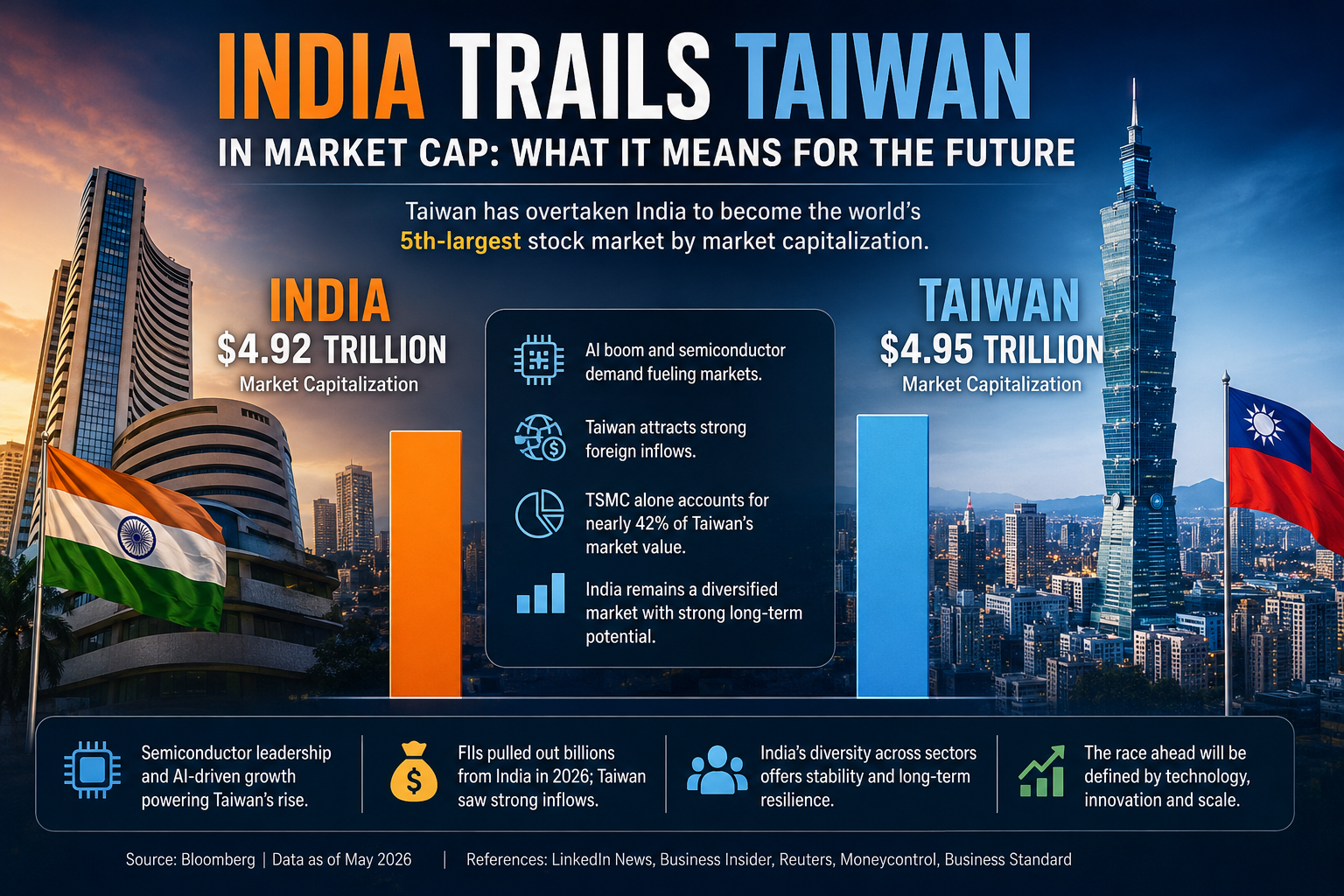
Taiwan has officially overtaken India to become the world’s fifth-largest stock market by market capitalization, a development that has sparked intense discussions among investors, economists, and policymakers. While the gap remains narrow, the shift highlights how artificial intelligence (AI) and semiconductor-driven growth are reshaping global capital markets.

According to Bloomberg data cited across multiple reports, Taiwan’s stock market capitalization reached approximately $4.95 trillion, slightly ahead of India’s $4.92 trillion. The primary reason behind this rise is the extraordinary rally in Taiwan Semiconductor Manufacturing Company (TSMC), the world’s leading chipmaker and one of the biggest beneficiaries of the global AI boom.

The surge in AI investments worldwide has created massive demand for semiconductors, high-performance chips, and advanced computing infrastructure. As companies race to develop AI technologies, investors are pouring money into semiconductor-heavy markets such as Taiwan and South Korea. This has pushed valuations of tech firms sharply higher. Reports also note that companies like SK Hynix and Micron Technology recently entered the trillion-dollar valuation club due to AI-driven optimism.

India, meanwhile, has faced a more challenging environment in recent months. Foreign investors have pulled billions of dollars from Indian equities in 2026, while Taiwan attracted strong overseas inflows. Concerns around slowing earnings growth, limited exposure to AI-related sectors, and global geopolitical uncertainty have affected market sentiment toward India.

However, many experts argue that this ranking change should not be viewed as a sign of weakness in the Indian economy. India’s market structure is fundamentally different from Taiwan’s. Taiwan’s stock market is highly concentrated, with TSMC alone accounting for nearly 42% of the market’s value. India, by contrast, has a far more diversified market spread across banking, manufacturing, energy, pharmaceuticals, technology, infrastructure, and consumer sectors.

SEBI Chairman Tuhin Kanta Pandey recently emphasized this point, stating that India remains “a very diversified market,” unlike Taiwan’s concentrated technology-heavy ecosystem. This diversity may provide India with greater long-term stability even if it limits short-term valuation spikes driven by AI enthusiasm.

The development also raises larger questions about India’s future growth strategy. Global investors are increasingly rewarding countries that dominate high-value technology manufacturing and innovation. Taiwan’s rise demonstrates how critical semiconductor leadership has become in the AI era. For India, this may strengthen the urgency to expand semiconductor manufacturing, AI infrastructure, and advanced technology capabilities under initiatives such as “Make in India” and semiconductor incentive programs.

Ultimately, the India-Taiwan market cap shift is not merely about rankings. It reflects a broader transformation in global investing priorities. Markets linked closely to AI, semiconductors, and advanced technology are attracting unprecedented capital flows. India still retains strong long-term growth potential due to its demographics, consumption economy, and diversified industries, but the latest developments show that future global leadership will increasingly depend on technological depth and innovation-driven growth.

References

  • LinkedIn News: India Trails Taiwan in Market Cap – https://www.linkedin.com/news/story/india-trails-taiwan-in-market-cap-8868650/
  • Reuters: Indian shares and market sentiment updates – https://www.reuters.com/world/india/indian-shares-likely-see-muted-start-focus-us-iran-talks-2026-05-27/
  • Moneycontrol: SEBI Chief comments on diversified Indian market – https://www.moneycontrol.com/news/business/markets/we-are-a-very-very-diversified-market-says-sebi-chief-as-taiwan-overtakes-india-s-m-cap-13931748.html
  • Business Standard: Taiwan overtakes India as AI rally reshapes global equity market rankings – https://www.business-standard.com/markets/news/taiwan-overtakes-india-as-ai-rally-reshapes-global-equity-market-rankings-126052601443_1.html
  • Business Insider: AI-driven semiconductor rally and chipmaker valuations – https://www.businessinsider.com/korean-chipmaker-sk-hynix-1-trillion-club-ai-rally-2026-5
Next Story
PTSGI Translation

PTSGI India: Professional Translation, Interpretation & Localization Services for Global Businesses

New Delhi – President Translation Service Group International (PTSGI), headquartered in Taipei, is a leading provider of professional language translation services (145+ languages) since 1966, continues to expand its presence as a trusted partner for businesses seeking high-quality translation, interpretation, localization, subtitling, dubbing, voice-over, and multilingual content solutions across global markets.

With increasing demand for cross-border communication, regulatory documentation, and multilingual customer engagement, PTSGI supports organizations with accurate, industry-specific language solutions designed to help brands operate seamlessly across diverse languages and cultures.


Meeting the Growing Need for Multilingual Communication

As international business expands rapidly across industries, the need for precise and culturally aligned communication has become essential. PTSGI addresses this demand by delivering professional translation and interpretation services that align with global quality standards, ensuring clients maintain clarity, consistency, and compliance in every market.

From corporate communications to technical manuals, legal contracts, and multimedia content, PTSGI provides tailored solutions that meet both local and international requirements.


Comprehensive Language Services Under One Roof

PTSGI offers a complete portfolio of language services, including:

  • Professional Translation Services (145+ global languages)
  • Technical & Engineering Translation (HVAC, manufacturing, energy, IT, manuals)
  • Legal & Certified Translation
  • Interpretation Services (On-site, Remote, Conference Interpretation)
  • Localization Services (Websites, mobile apps, software, product content)
  • Subtitling & Captioning (Corporate videos, training modules, media content)
  • Dubbing & Voice-over Services (Multi-language studio solutions)
  • Transcription Services
  • Multilingual Desktop Publishing (DTP)

Each project is executed through a structured workflow that ensures linguistic accuracy, formatting consistency, and timely delivery.


PTSGI India

PTSGI’s India office is coordinated by Mr. Vivek Mishra, who serves as the key point of contact for both domestic and international clients.

Mr. Vivek Mishra oversees end-to-end project coordination, ensuring smooth communication, timely execution, and quality delivery across all service lines. He plays an active role in managing multilingual requirements for corporate, government, and industrial clients, supporting both recurring and high-volume projects with dedicated coordination.


Quality, Confidentiality & Client-Centric Execution

PTSGI differentiates itself through its commitment to quality assurance and professional project management. Every assignment undergoes careful review processes to ensure the highest level of accuracy and consistency.

Key strengths include:

✅ Industry-specialized linguists & subject-matter experts
✅ Multi-step QA and proofreading process
✅ Secure and confidential handling of sensitive documents
✅ Scalable delivery model for bulk and recurring projects
✅ Fast turnaround options for urgent requirements
✅ Dedicated project coordination and responsive support


Supporting Industries Worldwide

PTSGI works with organizations across multiple sectors, including: Legal | Manufacturing | Engineering | HVAC | Energy | Healthcare | IT & Software | Government | Corporate & Marketing

Whether supporting multinational companies, SMEs, or public sector organizations, PTSGI enables clear communication and smoother international operations.


Useful Links

🌐 Website: https://www.ptsgi.com/en/
📩 Request a Quote: indmkt1@ptsgi.com


Contact for Business Enquiries

PTSGI India Office – Vivek Mishra
📍 Address: Spacetime, 1st Floor Office. 261, Lane no.5, Westend Marg, Saket, New Delhi, Delhi 110030
📞 Phone: +91 98711 82233, +91 11 47048089
📧 Email: indmkt1@ptsgi.com
🌐 Website: https://www.ptsgi.com/en/


About PTSGI

PTSGI is a professional language translation services provider delivering end-to-end multilingual solutions including translation, interpretation, localization, subtitling, dubbing, voice-over, and multilingual publishing. With a strong network of expert linguists and a structured quality assurance process, PTSGI helps organizations communicate effectively across borders and cultures.

Next Story
Taipei 101 Welcomes 2026 with a Spectacular New Year Fireworks Show

Taipei 101 Welcomes 2026 with a Spectacular New Year Fireworks Show

Taipei celebrated the arrival of 2026 with its annual New Year’s Eve countdown, climaxing in a dramatic six-minute fireworks show launched from Taipei 101, the iconic skyscraper dominating the city’s skyline.

Theme & Production: The 2026 display, titled “SPARK 101,” featured low-smoke pyrotechnics and was paired with synchronized music composed by young Taiwanese musicians. There were also special light projection segments, including tributes like a “Taiwan’s invisible heroes” theme shown on the tower’s façade before midnight.

Crowd & Celebrations: Tens of thousands of people gathered in Taipei’s Xinyi District and around City Hall Plaza despite rainy conditions to watch the performance and join the countdown festivities, which included concerts and cultural programming leading up to midnight.

Join our newsletter
and stay up to date

fill this form to get mail from us.

join 1000+ people reading our newsletter