Japan Korea Taiwan China

Japan’s MUFG Plans $2.6 Billion Investment in Shriram Finance

Mumbai: Mitsubishi UFG Financial Group (MUFG) is in advanced talks to take a 20% stake in India’s second largest non-banking finance company (NBFC), Shriram Finance, for about Rs 23,200 crore ($2.6 billion), according to people familiar with the matter.

The move underscores the heightened interest of Japanese financial services corporations in Indian banks and shadow lenders.

If a deal takes place, this will be the largest foreign direct investment (FDI) in the Indian NBFC space till date.
Both sides have signed an exclusivity agreement on negotiations, said the people cited. The investment by MUFG will be through a primary issuance via a preferential allotment and will not entail any secondary sale of shares, they said. The Japanese bank is, however, not averse to taking a higher stake in the NBFC, even a controlling interest, over time, the people said. In such an eventuality, it would have to launch an open offer. The transaction is likely at current price levels.

The promoters own 25.39% of Shriram Finance, the bulk of which is held through group holding company Shriram Capital, which has a 17.85% stake. The rest is owned by the public and institutional shareholders, including the government of Singapore (5.41%) and Monetary Authority of Singapore (1.2%).

Shriram Capital is owned by Shriram Ownership Trust and Sanlam of South Africa. Shriram Capital also has a stake in the parent’s insurance joint venture with Sanlam. Shriram Finance is up 5.85% in the year to date, having closed Tuesday at Rs 616.40 on the BSE for a market capitalisation of Rs 1.16 lakh crore. MUFG and Shriram Finance didn’t respond to queries. However, in a late-night stock exchange notice, Shriram Finance said it is not aware of “any potential majority stake sale of equity shares of the company by any shareholder(s) and no such shareholder(s) has approached the company or expressed his/their intention to sell any shares held by him/them in the company.”

Shriram Finance had total assets under management (AUM) of Rs 2.72 lakh crore at the end of the June quarter, up 17% from the year earlier. In the private sector, that’s second only to Bajaj Finance with AUM of Rs 4.41 lakh crore. It has close to 10 million customers across vehicle finance, MSME loans, personal loans and gold loans.

This is MUFG’s second try at getting a large holding in a fast-growing NBFC in India after unsuccessfully seeking a stake in HDB Financial Services for $2 billion. HDB Financial is the NBFC arm of HDFC Bank.

It had also evaluated stakes in Yes Bank. SMBC, another Japanese banking giant, bought into that Indian lender earlier this year.

MUFG, which has owned a fifth of Wall Street investment bank Morgan Stanley since 2008, has been backing another Indian NBFC, DMI Finance, since April 2023.

Sluggish growth in Japan has pushed some of its biggest lenders and financial services groups to seek inorganic growth opportunities across Asia.

Commercial vehicles account for the biggest chunk of the Shriram Finance portfolio at Rs 1.23 lakh crore or 45% of the loan book, followed by passenger vehicles at Rs 56,634 crore and 22% and MSMEs at Rs 38,824 crore and 14%. It had 3,225 branches at the end of June, most of them in semi-urban and rural areas.

Shriram Finance on Friday announced it had invested an additional Rs 300.05 crore in wholly-owned subsidiary Shriram Overseas as part of a phased capital infusion approved by the board in May 2025.

Shriram Finance reported net profit of Rs 2,159.4 crore in the June quarter, up 6.3% from the year before. Net interest income (NII) rose 10.3% to Rs 5,773 crore. Operating profit was Rs 4,192 crore, below the Street expectation of Rs 4,422 crore.

For MUFG, which has invested heavily in corporate banking, Shriram’s portfolio of commercial vehicle, two-wheeler and gold loans as well as loans against property gives it entry into the lucrative retail lending market in India. The company’s asset quality improved to 2.57% of net non-performing assets (NPAs) from 2.71% a year earlier.

Credit rating agency India Ratings expects growth of NBFC assets under management to moderate to 18.5% in FY26 from 25% last year after bank funding to the sector reduced as the Reserve Bank of India normalised risk weights. The rating agency has maintained a neutral sector outlook for NBFCs in FY26 with funding likely dependent on asset quality trends, especially in the unsecured segment.

Higher-rated NBFCs with better asset quality and access to diversified funding will be better placed because of their wide network and lower cost of funds. In recent years, large private NBFCs have significantly increased their market share relative to smaller entities. At the end of September 2024, the loan market share of 17 major NBFCs tracked by Fitch Ratings had risen to 38%, up from 30% in March 2022. These prominent NBFCs achieved a CAGR of 20% in loans from March 2022 to September 2024, outpacing the overall NBFC sector’s growth of 9%.


Source link

Next Story
Taipei 101 Welcomes 2026 with a Spectacular New Year Fireworks Show

Taipei 101 Welcomes 2026 with a Spectacular New Year Fireworks Show

Taipei celebrated the arrival of 2026 with its annual New Year’s Eve countdown, climaxing in a dramatic six-minute fireworks show launched from Taipei 101, the iconic skyscraper dominating the city’s skyline.

Theme & Production: The 2026 display, titled “SPARK 101,” featured low-smoke pyrotechnics and was paired with synchronized music composed by young Taiwanese musicians. There were also special light projection segments, including tributes like a “Taiwan’s invisible heroes” theme shown on the tower’s façade before midnight.

Crowd & Celebrations: Tens of thousands of people gathered in Taipei’s Xinyi District and around City Hall Plaza despite rainy conditions to watch the performance and join the countdown festivities, which included concerts and cultural programming leading up to midnight.

Next Story

Experience the Hamamatsu and Lake Hamana Area: A Floral Wonderland for Unforgettable Moments[PR]| JAPAN Monthly Web Magazine

Shizuoka Prefecture, located in central Honshu between Tokyo and Nagoya, is a region rich in natural beauty. To its east stands Japan’s highest peak, Mount Fuji, while the Pacific Ocean stretches to its south. In the Hamamatsu and Lake Hamana area, the Hamanako Flower Festival is held every spring, offering visitors a chance to admire the vibrant flowers. The area also features attractions the whole family can enjoy, including a resort-style amusement park and a scenic ropeway that crosses the lake. It is even celebrated as a “destination where you can show your parents just how much you appreciate them.” Join us as we uncover the many charms of the Hamamatsu and Lake Hamana area, an ideal spot for making lasting memories.

Hamanako Flower Festival: A Celebration of Seasonal Blooms

With its abundant sunshine and mild climate, the Lake Hamana area in Hamamatsu City, Shizuoka Prefecture, is a haven for vibrant seasonal flowers. From March to June, the annual Hamanako Flower Festival brings the landscape to life, celebrating the beauty of nature in full bloom.

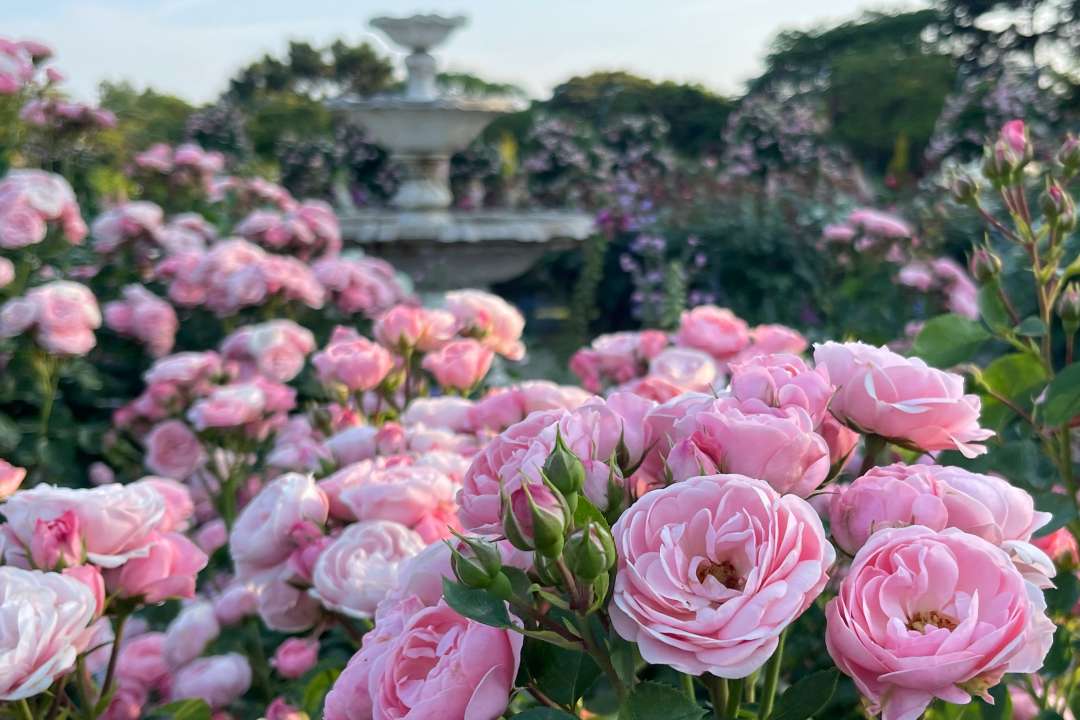
With the catchphrase “Spring in Japan begins at Lake Hamana,” the festival takes place at two main venues: Hamamatsu Flower Park and Hamanako Garden Park. The event offers a stunning relay-style display of flowers that bloom throughout each season, including Japan’s iconic cherry blossoms, tulips, nemophila, wisteria, and roses, attracting flower lovers from near and far.

Hamanako Flower Festival

Enjoy Seasonal Flowers at Hamamatsu Flower Park

Hamamatsu Flower Park, one of the main venues of the Hamanako Flower Festival, is a sprawling botanical garden covering 300,000 square meters. Home to around 3,000 plant species, it boasts breathtaking floral displays throughout the year.

Rose Garden, Hamamatsu Flower Park

From mid-March to mid-April during the flower festival, the Tulip and Cherry Blossom Garden reaches its peak, with 1,300 cherry blossom trees and 500,000 tulips blooming simultaneously. This is the only garden in Japan where you can witness such a large-scale display of cherry blossoms and tulips.

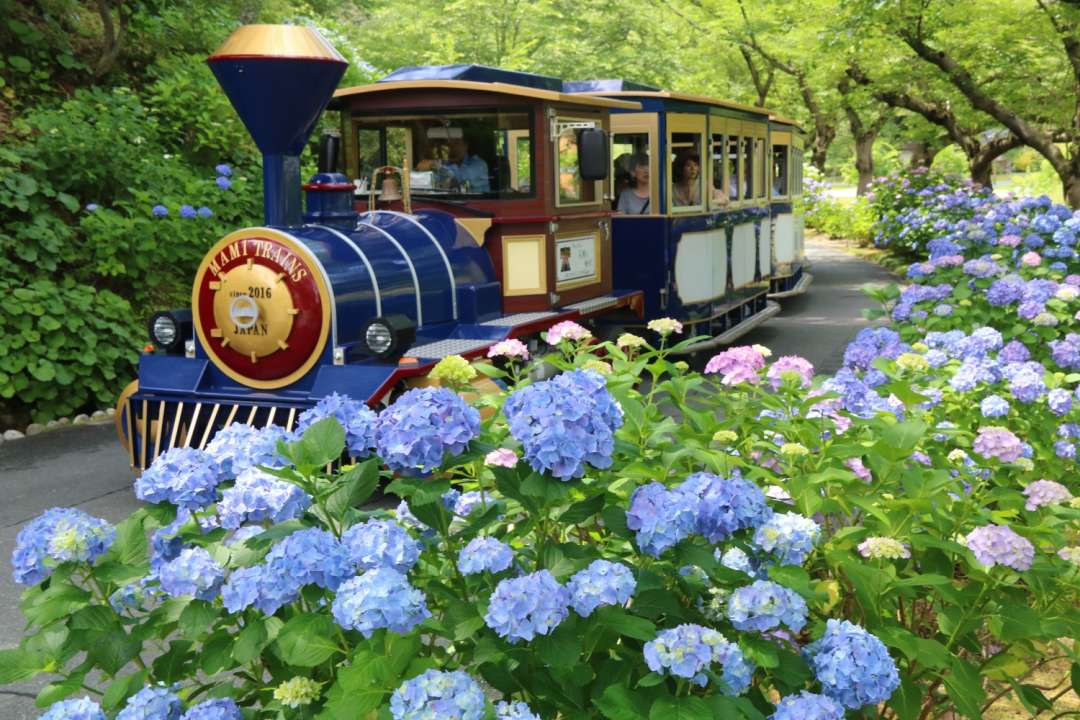
As spring transitions to early summer in late April to early May, the 170-meter-long Wisteria Corridor becomes a mesmerizing sight, especially when illuminated at night. In June, hydrangeas in shades of white, blue, and purple brighten the rainy season. The park also features a large greenhouse called the Crystal Palace, dynamic fountain shows synchronized with music, and the Flower Train bus, which offers a scenic ride through the park—making it a perfect destination for families.

Flower Train Bus at Hamamatsu Flower Park

Spectacular Flower Festival Scenes at Hamanako Garden Park

Hamanako Garden Park, the other main venue of the Hamanako Flower Festival, is a vast green space spanning approximately 56 hectares, offering expansive views of the natural beauty and open spaces of Lake Hamana.

From late March to mid-April, 10,000 tulips in 100 varieties blossom in striking colors, heralding the arrival of spring. Then, from mid to late April, around 300,000 nemophila flowers bloom to create an unforgettable sight, transforming the landscape into a vast blue carpet. The park also features a 50-meter-high observation tower, showcasing panoramic views of the entire garden park and Lake Hamana.

The Flower Garden, Hamanako Garden Park

Flower Museum, Hamanako Garden Park

Visitors can also discover rare flowers, such as the evergreen witchhazel, which blooms in April in Kosai City, adjacent to Hamamatsu. Found in only three locations in Japan, its delicate ribbon-like petals make it especially captivating. Another rarity is the shibukawa tsutsuji (jingu tsutsuji, Rhododendron sanctum), which blooms in May in Mikawa, parts of Mie Prefecture, and Hamamatsu. This rare flower thrives only in serpentine rock areas.

Evergreen Witchhazel

Jingu Tsutsuji (Rhododendron Sanctum)

Ryotanji Temple: A Legacy of 1,300 Years

According to temple records, Ryotanji Temple was founded by the priest Gyoki during the Nara period (710–794). From the Heian period (794-1185), it is said to have become the family temple of the Ii clan, a samurai lineage. The temple’s garden, designed by Kobori Enshu—a feudal lord and garden designer of the Edo period (1603–1867)—has been designated a national place of scenic beauty. It features numerous stone arrangements and artificial hills that depict cranes and turtles.
Ryotanji Temple also hosts seasonal flower events, including the Flower Festival in early April and the Satsuki(azalea) Festival from late April to May.

Ryotanji Temple

Ryotanji Garden by Enshu Kobori

Hamanako PalPal: A Resort-Style Amusement Park by the Lake

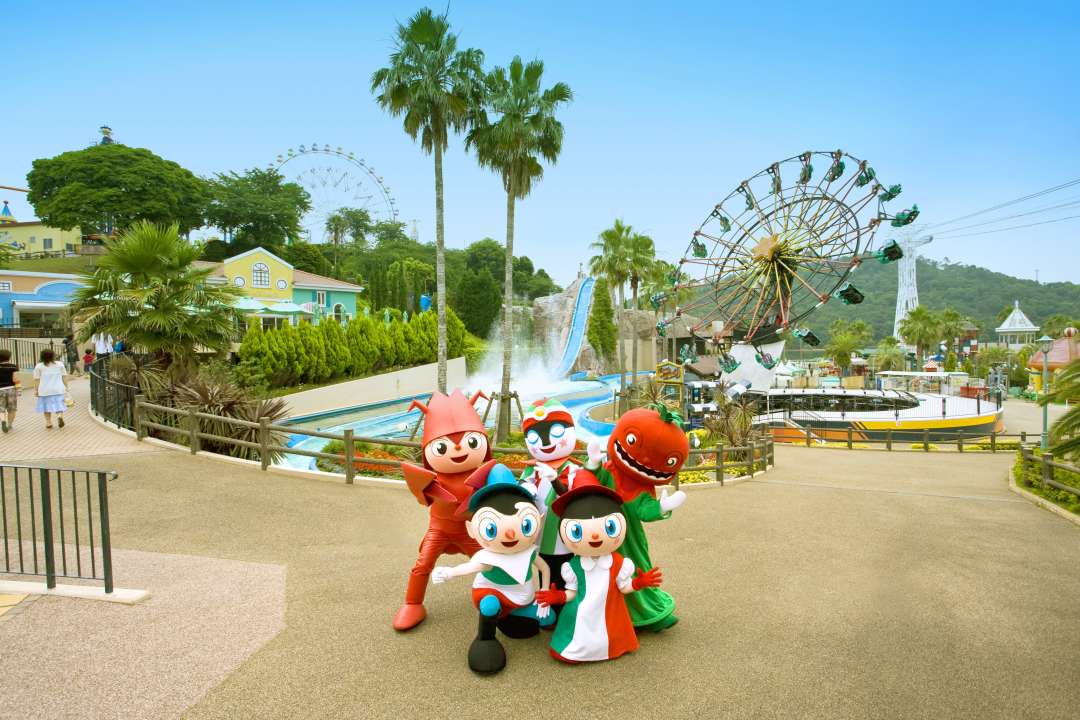
Located on the shores of Lake Hamana, Hamanako PalPal is a resort-style amusement park featuring around 30 attractions suited for all ages, from young children to adults. With a mix of fairy-tale-themed rides and thrilling extreme attractions, it’s a top destination for families and couples alike.

For an even more memorable experience, pair your visit with a ride on the Kanzanji Ropeway next door. Together, they offer a fun-filled way to take in the beauty of Lake Hamana.

Kanzanji Ropeway: Japan’s Only Ropeway Crossing a Lake

The Kanzanji Ropeway is the only ropeway in Japan that crosses a lake, traversing 723 meters in just four minutes. Below, the picturesque Lake Hamana stretches between the cities of Hamamatsu and Kosai in western Shizuoka Prefecture. The ropeway connects the Hamanako PalPal amusement park to the summit of Mount Okusa, offering a breathtaking 360-degree panoramic view throughout the ride.

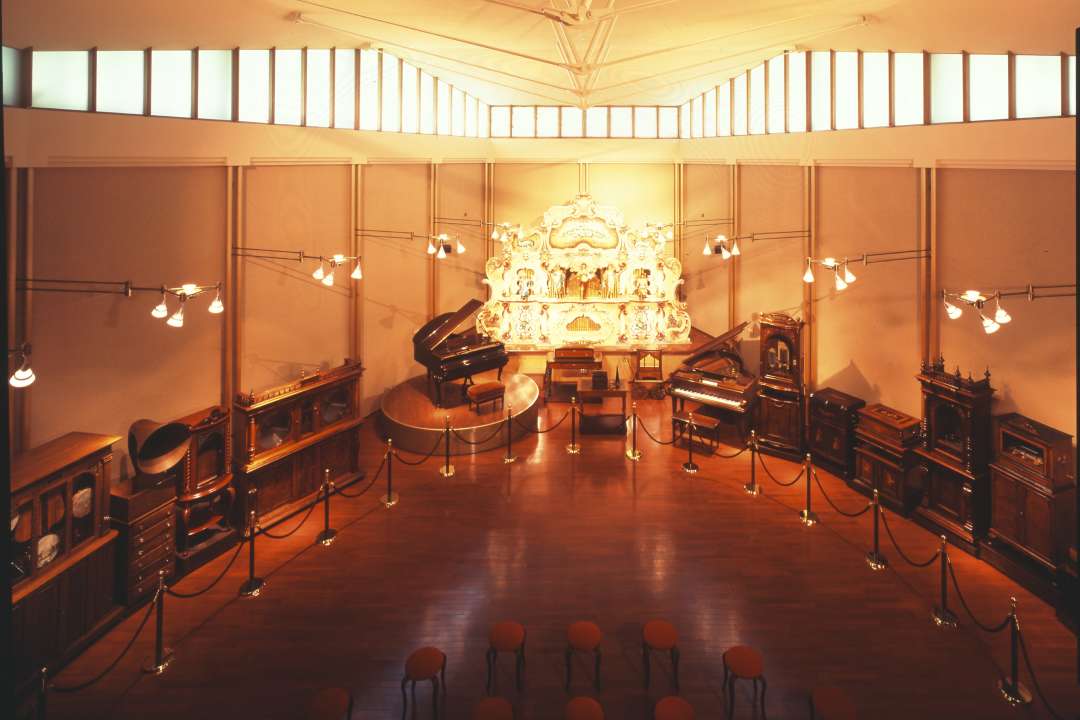
At the summit of Mount Okusa sits the Hamanako Orgel Museum, home to a collection of valuable music boxes. Visitors can admire the intricate displays and enjoy the enchanting sounds. From the observation deck, you can take in sweeping views of Lake Hamana and the Pacific Ocean—and on clear days, even Mount Fuji. The scenery transforms with the seasons and time of day, offering plenty of dynamic sights.

Hotel Wellseason Hamanako: Savor Local Flavors and Relax in Hot Springs

Located in the Kanzanji Onsen hot spring area, Hotel Wellseason Hamanako is a family-friendly resort facility designed to accommodate guests with babies and small children, ensuring a stress-free stay.

The hotel is directly connected to Hamanako PalPal, and guests enjoy free admission to the amusement park. For relaxation, hotel guests have exclusive access to the open-air bath Hitotoki no Yu, or can unwind at the adjacent Hanasaki no Yu.
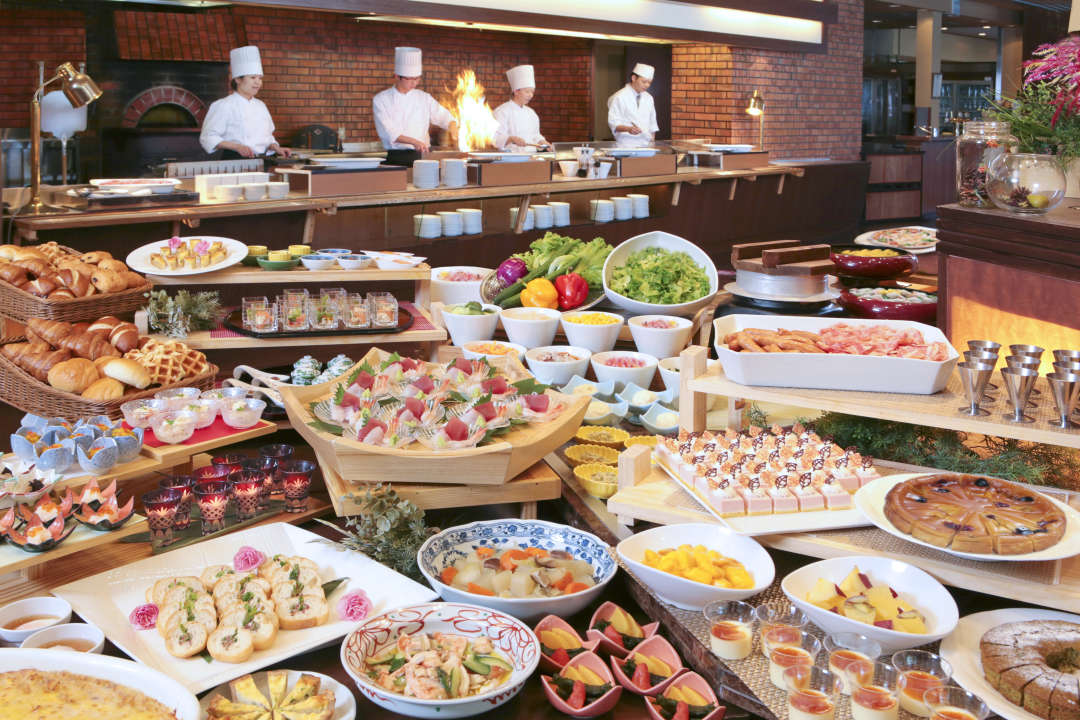
The buffet-style meals highlight local specialties, including Lake Hamana’s famous unagi (eel), premium Mikkabi-brand Japanese beef, and Hamamatsu gyoza. These flavors are beloved by both visitors and locals alike.

How to get there

Hamamatsu is easily accessible from Tokyo or Osaka in about 90 minutes via the Shinkansen bullet train. For those traveling by air, Chubu Centrair International Airport is a convenient option. From Nagoya, the Shinkansen bullet train is a hassle-free way to reach Hamamatsu in just 30 minutes. Once at Hamamatsu Station, the Lake Hamana area is about a 50-minute bus ride away.

Source link

Next Story

Celebrate 30 Years of Indo-Japan Friendship at the Hyderabad Japan Festival 2025 This Weekend!

This weekend, Hyderabad will play host to a slice of Japan. The 30th annual Hyderabad-Japan Festival returns to the city on October 25 and 26, 2025, at the State Art Gallery, Madhapur. Entry is free and open to all. Expect Japanese martial arts demonstrations, folk dances, and live music bands in the Japanese tradition.

There will also be Kuchipudi performances, live demos of Ikebana (the art of flower arrangement), Bonsai, Sumie (Japanese ink painting), and Origami (the art of paper sculpting). Visitors can try their hand at the crafts while learning directly from experts. Exhibitions and workshops featuring calligraphy and painting to photography and design of both cultures.

The event is organized by Na Ra JAPAN HUB, an initiative of the Naga Rama Trust, founded by Dr. B. Ramabhadra and Mrs. Naganath. Having spent nearly two decades in Japan, the couple began this festival three decades ago to foster cultural understanding between India and Japan. What started as a modest gathering has now become one of Hyderabad’s most anticipated annual events.

Talks and Exchanges

The Hyderabad-Japan Festival has always been about learning what makes Japan’s culture, education, and lifestyle so admired around the world, and finding how it connects with Indian values. This year, there will be special sessions and talks on:

  1. The Japanese language and learning pathways for students in India
  2. Education and career opportunities in Japan
  3. Indo-Japan relations and city-level collaborations like that between Hyderabad and Hamamatsu City
  4. Insights into Japan’s productivity methods, work ethics, and the globally loved Ikigai philosophy

These sessions will help students, entrepreneurs, and professionals understand how collaboration between the two nations is growing in education, business, and culture.

The festival has strong institutional support from:

  • Consulate-General of Japan in Chennai
  • Japan Foundation, New Delhi
  • JETRO (Japan External Trade Organization), New Delhi
  • Hyderabad Japanese Association

What To Expect

Japanese art groups like the Ohara School of Ikebana (Hyderabad), Golden Dragons, and several individual masters of Bonsai, Origami, and Sumie will showcase their skills. School students will participate in Origami, Painting, and Japanese Speech contests. Winners will be recognized during the festival. Adding to the festival’s significance, several dignitaries and cultural leaders will be in attendance. Among them are: Kenji Miyata, Acting Consul General of Japan, Chennai; Koji Sato, Director General, Japan Foundation, New Delhi; Takeshi Suzuki, Director General, JETRO, New Delhi; Collector Smt. Harichandana, IAS; Former DGP Sri SK Jayachandra, IPS (Retd.). They will be joined by artists, educators, business leaders, and enthusiasts from both countries.

Source link

Next Story

Explore the Real Places Behind Shōgun and More! Literary-inspired Travel in Japan


The 1975 historical novel Shōgun by James Clavell, on which the 2024 TV series of the same name is based, is a work of fiction that includes real historical persons and events. Although his name has been changed in the novel, an Englishman really did sail to 16th-century Japan and become a samurai in the service of a warlord who was intent on becoming Shogun, the country’s military governor. Not only that, but all the locales mentioned in the book are real places, and fans of the story can go there today and discover a side of Japan that they’ve most likely only read about. In this article, we’ll introduce a fascinating itinerary that will take you through the world of Shōgun and beyond.

Did Shōgun Happen at Osaka Castle? A Look at the Facts and History

In Clavell’s novel, Osaka Castle features prominently as the iconic backdrop for the political turmoil that followed the death of the fortification’s previous lord, Toyotomi Hideyoshi (the Taiko: his title in later life and his character’s title in the fictional retelling.) Beyond the book, Osaka Castle dates back to 1583, and it served as Toyotomi’s seat of power when he attempted to unify a fractured Japan after the emperor and the shogun lost political power in the 15th century. The taking of Osaka Castle was instrumental in Tokugawa Ieyasu (the fictional Toranaga Yoshii in the book) consolidating power and ultimately ending nearly 200 years of civil war.

Osaka Castle illuminated at night

Today, Osaka Castle remains one of the most iconic historical destinations in Japan. The castle with its surrounding 106-hectare park offers visitors an immersive cultural experience that includes the pleasures of Japan’s four seasons (with cherry blossoms in spring and colorful foliage in autumn), traditional architecture, and curated exhibitions. Some of the castle turrets are original structures dating back hundreds of years, while the main keep is a reconstruction from 1931 and a Registered Tangible Cultural Property that today functions as a museum. Displays highlight the political, military, and architectural history of the region.

The Izu Peninsula and the First European Samurai

The rugged cliffs of Izu Peninsula, Shizuoka Prefecture

In Shōgun, Englishman John Blackthorne (based on the historical figure William Adams) arrives in Japan at the fictional Anjiro, based on the real-life Ajiro, a village on the eastern coast of the Izu Peninsula in Shizuoka Prefecture. Adams actually arrived in Japan on the island of Kyushu, over 850 kilometers away, but Izu’s proximity to Edo (modern-day Tokyo) made it a more convenient setting for the book’s narrative. Being able to walk in Blackthorne’s footsteps is not the only reason to visit the peninsula, though.

Aerial View of Mt. Omuro

The Izu Peninsula, located forty minutes from Tokyo on the Shinkansen bullet train, is a UNESCO Global Geopark where visitors can explore many natural and cultural attractions like  Mt. Omuro and the Hakone Hachiri section of the old Tokaido highway, which once connected Edo and Kyoto. Coastal towns in Izu are famous for their onsen (hot springs), fresh seafood, and panoramic views of Mt. Fuji. Inland areas are rich in nature with scenic hiking trails lined with cedars, which were planted around the time William Adams lived in Japan.

The Historic Battlefield of Sekigahara Shaped Shogun-Era Japan

Site of Tokugawa Ieyasu’s First Encampment (Momokubariyama) at the Sekigahara battlefield

The Shōgun narrative ends after the Battle of Sekigahara, during which Toranaga (the real-life Tokugawa Ieyasu) defeated his archnemesis Ishido (the real-life warlord Ishida Mitsunari) and cemented his rule over Japan. Fought on October 21, 1600, in present-day Gifu Prefecture, the actual battle between Ieyasu and clans loyal to the Toyotomi was the largest in the history of feudal Japan

The Gifu Sekigahara Battlefield Memorial Museum recreates the greatest battle in Japanese history

Today, Sekigahara is a tranquil town that preserves the legacy of this decisive clash. A large portion of the battlefield has walkable routes that take visitors through preserved encampment sites enhanced with immersive displays. In addition, the Gifu Sekigahara Battlefield Memorial Museum provides multilingual exhibitions that highlight the importance of the battle in the broader context of Japan’s political history.

Journey into Japanese Literature

Tokushima Awa Odori, where the tradition began – Koenji’s version carries on the spirit.

Fans of Japanese literature fortunately have more destinations to explore than just those connected to Shōgun. In Haruki Murakami’s novel 1Q84 (2009), the Tokyo neighborhood of Koenji serves as an important spot from which the main characters navigate a parallel existence. Real-life Koenji is known for its underground, bohemian culture, vintage shops, live-music venues, and lively bar scene. It’s also where the dance festival Koenji Awa Odori takes place. Held since 1957 on the last weekend of August, it attracts over a million visitors annually and involves 12,000 dancers. Outside of big celebrations, Koenji is a great place to find authentic Japanese street culture and to shop for unique fashion.

Maiko (apprentice geisha) in Gion, Kyoto

A completely different atmosphere can be found in the Gion district of Kyoto, the primary setting for Arthur Golden’s Memoirs of a Geisha (1997). Taking place in the early 20th century, this novel highlights Gion’s traditional geisha teahouses and the neighborhood’s historic significance. Established during the late 14th century around Yasaka-jinja Shrine, Gion remains a center for Japan’s traditional arts, including dance, music, and tea ceremony. Visitors can wander along cobblestone streets, attend geisha performances, and discover historic architecture like Kennin-ji temple, the oldest Zen temple in Kyoto, dating back to 1202 and located just south of Gion.

An Itinerary in Every Book

View of Yuigahama Beach, Kamakura

Natsume Soseki’s novel Kokoro (1914) is a psychological examination of modernity and human relationships, and it has come to inspire readers to visit Kamakura City, in Kanagawa Prefecture, where one of the main characters famously enjoys swimming. These visitors might be interested in Kamakura’s Yuigahama Beach, a popular leisure destination that attracts tourists and locals alike. Kamakura is the old samurai capital of Japan, full of tangible history like the Great Buddha of Kamakura, a National Treasure dating back to 1252.

Every story set in Japan can lead to a new adventure. A visit to any place becomes much more meaningful if that place is the setting of a favorite book.

Source link

Join our newsletter
and stay up to date

fill this form to get mail from us.

join 1000+ people reading our newsletter